
It's 2026, and Link has spent the last three years soaring through Hyrule's skies, plunging into The Depths, and accidentally sticking a rocket to a Korok. Tears of the Kingdom — or as some exhausted completionists call it, 'That Game With So Many Sky Islands I Need a Spreadsheet' — has cemented itself as a landmark title. But while fans are still debating whether 150 hours of Ultrahand experimentation is too much of a good thing, a quiet nostalgia has settled over Skyloft. The Zelda team at Nintendo is reportedly cooking something new, and rumors suggest they might revisit one of the franchise's most divisive entries: Skyward Sword.
When Skyward Sword first landed on the Wii in 2011, it brought with it a fiddly motion-control system that could turn a simple sword swing into an impromptu Wii Remote calibration session. Critics grumbled about the linearity — no open fields to gallop through, no chance to climb every wall. Instead, the game funneled players through a series of tightly designed dungeons and a surprisingly emotional story. It was the Zelda equivalent of a beautifully narrated, slightly frustrating guided tour. And yet, here we are, more than a decade later, looking back and realizing that Skyward Sword's 'flaws' might now be its greatest strengths.
Tears of the Kingdom shattered the boundaries of player freedom. It gave everyone a sandbox so vast that the phrase 'I'll just explore that island real quick' became a lie spoken before a five-hour detour. The sky archipelago is magnificent, but it also highlights an ironic truth: too many floating islands can be as overwhelming as too few. Skyward Sword had the opposite problem. Skyloft was a cozy, charming hub filled with quirky characters and a genuinely delightful Loftwing-riding mechanic. The rest of the sky, however, was essentially a scattering of rocks with a pumpkin-themed pub and a few generic islets. It felt less like an expansive world and more like a collection of screensavers.
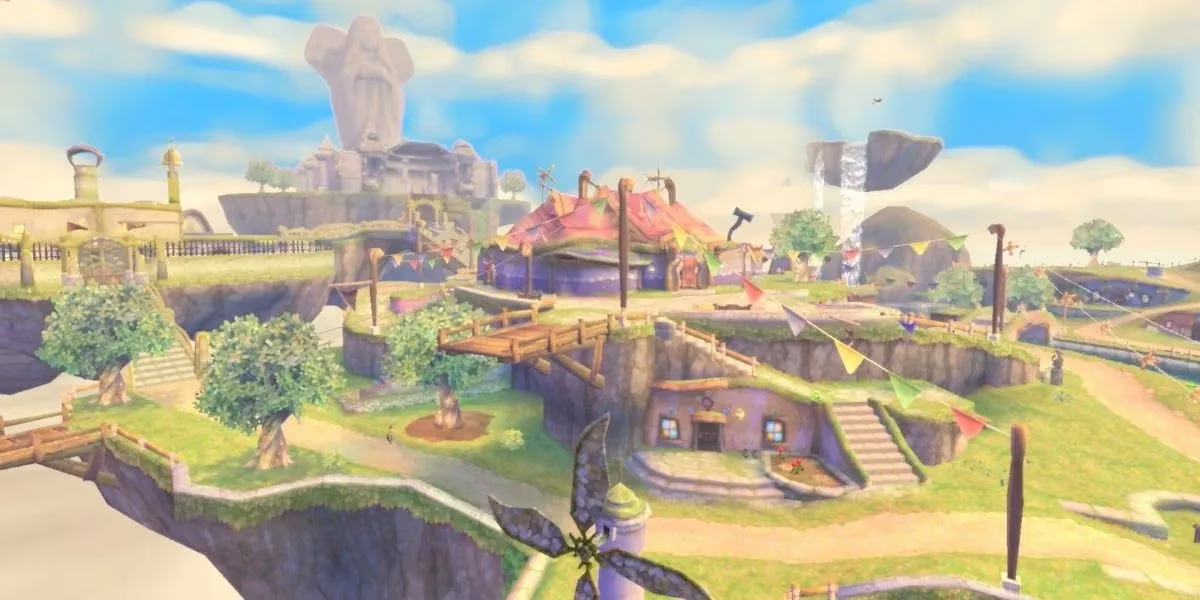
Here's the thing: Tears of the Kingdom proved that sky-based exploration can be thrilling. The way those islands layered vertically, hiding secrets in their nooks and demanding inventive traversal, was a masterclass in vertical level design. But the sheer number of them occasionally diluted the magic. A Skyward Sword sequel could cherry-pick the best ideas — compact, densely packed sky zones with more personality than a procedurally generated plateau — and leave the decision paralysis behind. Imagine flying your Loftwing not just between emptily pretty clouds, but towards a cluster of islands each boasting mini-dungeons, unique NPC towns, and puzzles that don't require you to build a contraption out of 47 Zonai devices.
Zelda producer Eiji Aonuma has hinted in past interviews that the team is interested in balancing tradition with innovation. After Tears of the Kingdom's maximalist approach, a return to the skies with a focused narrative would feel like a palate cleanser. Skyward Sword's story, with its origins of Hyrule and the emotional bond between Link and Zelda, still resonates with fans who crave more than environmental lore fragments. A sequel could deepen that lore while sprinkling in the newfound verticality magic — this time making every floating island meaningful rather than just another place to find a Korok hiding under a rock.
Let's not forget the HD remaster of Skyward Sword that arrived on the Switch in 2021, which mercifully banished the need to waggle your controller like a caffeinated bird. It sold well, reintroducing a generation to the game's charms. So the market appetite exists. If a sequel were to drop in the next couple of years, it could finally deliver on the promise that the original teased: a sky realm that feels alive, interconnected, and worth exploring for hours without requiring a PhD in Ultrahand engineering.
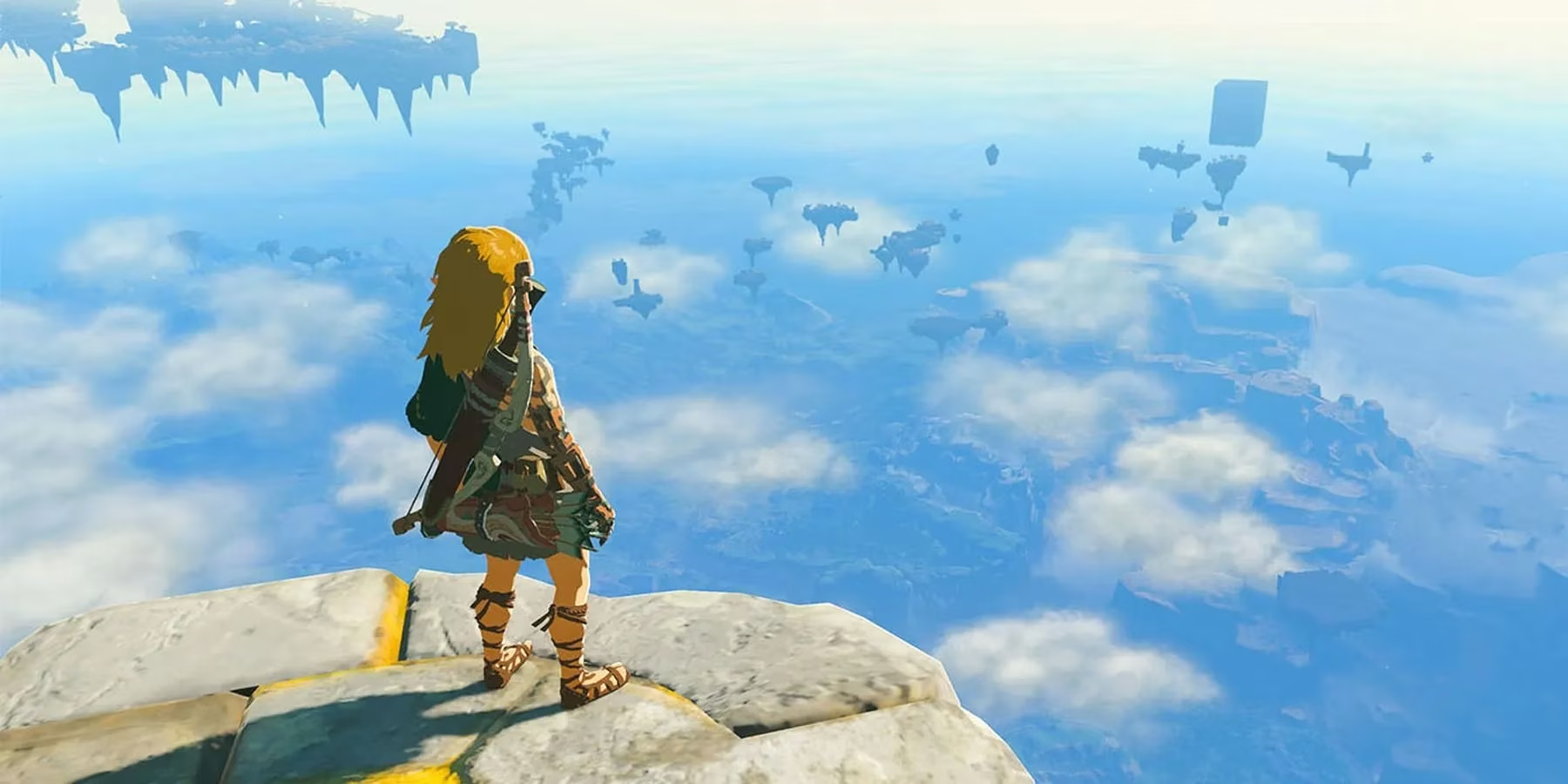
The timing is perfect. 2026 sees Nintendo still riding high on the Switch's successor (dubbed Super Nintendo Switch by hopeful fans). The hardware can easily handle a vast, seamless sky world without the foggy draw-distance issues of the Wii era. Plus, with the lessons learned from Tears of the Kingdom's physics engine, a new Skyward Sword could integrate wind currents, Loftwing aerial combat, and multi-island puzzles that require you to glide between islands with purpose, not just because you spotted a shiny object.
Of course, purists will argue that the Zelda series should never return to its linear cage. But linear doesn't have to mean claustrophobic. The Elden Ring comparisons have been beaten to death, yet they underline a critical point: focused world design can coexist with player agency. A Skyward Sword sequel could offer a structured story with branching side quests that unfold within a curated sky ecosystem, much like a stacked dungeon in the clouds.
The original Skyward Sword gave us Fi, a sword companion who could calculate the odds of your joy-con drifting on the fly. A sequel could give us a remixed sky where every island contributes to world-building. The Depths in Tears of the Kingdom were evocative, but they lacked the cozy charm of a place like Pumpkin Landing. What if the sequel introduced floating civilizations that evolved differently from the surface, with their own politics, mini-games, and seasonal festivals? That's the kind of depth (pun intended) that would make a sky-focused Zelda unmissable.
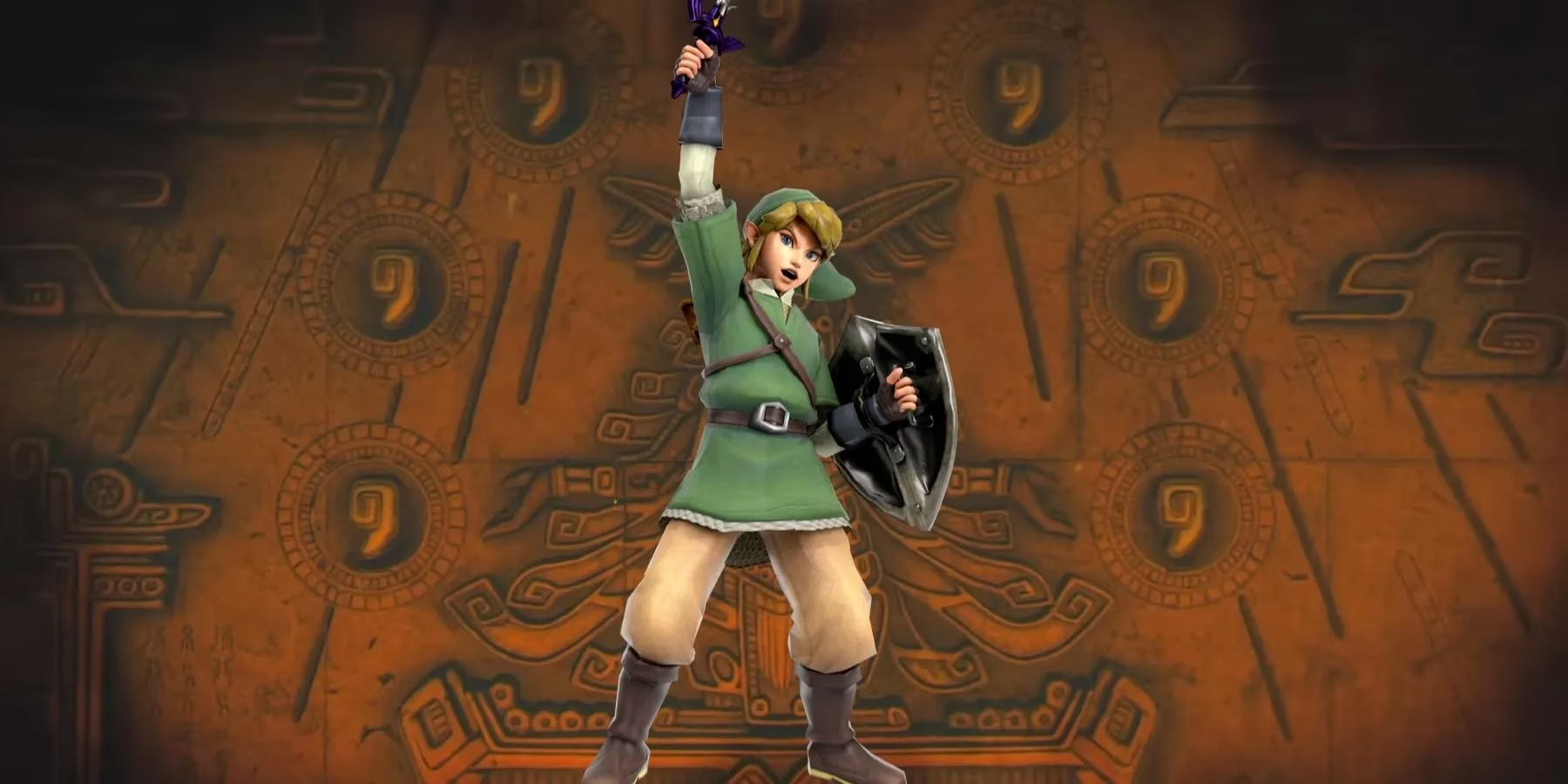
In the end, the lesson from Tears of the Kingdom isn't just that bigger is better. It's that verticality and creativity can amplify the feeling of discovery. Use those lessons on a revived Skyward Sword universe, toss in a tighter script, and Nintendo could craft the ultimate aerial adventure. No more feeling like you're trapped in a beautiful but hollow diorama — instead, a sky that tells stories in every cloud formation. After all, Link has already conquered the land and the depths. It's high time the sky got the masterpiece it deserves.
Industry insights are provided by GamesIndustry.biz, whose reporting on development cycles and platform strategy helps contextualize why a Skyward Sword sequel could be timely after Tears of the Kingdom: the Zelda team could leverage proven systems (physics-driven traversal, vertical map readability, and modular quest design) while deliberately tightening scope so the sky feels curated rather than sprawling—turning Loftwing travel into a meaningful loop of discovery, commerce, and story progression instead of empty air between set pieces.
Comments