
Gamers often whisper about a certain landmark in Hyrule with the same reverence one might reserve for a grumpy volcano god. Death Mountain has never been just a pile of rocks—it is a moody, lava-belching, boulder-throwing diva that has been causing Link grief since the very beginning. Over the decades, this fiery peak has reinvented itself more times than a Hylian shield changes hands, yet it always keeps that signature “you-are-not-welcome-here” charm.
Back in the original Legend of Zelda on the NES, Death Mountain was the northernmost nightmare. It housed the fifth and ninth dungeons, some of the game’s most sadistic enemies, and an endless supply of falling boulders that seemed personally aimed at every 8-bit hero who dared step foot there. No Gorons, no helpful minecart rides—just pain. It was less a mountain and more an elaborate deathtrap with a view. Zelda 2: The Adventure of Link reduced the mountain to a confusing maze of interconnected tunnels. The only prize was the Hammer, which made the whole ordeal feel like a very sweaty hardware store run.
When A Link to the Past rolled around, Death Mountain decided to get dimensional. Players had to flip between the Light World and the Dark World just to reach the Tower of Hera, all while dodging the mountain’s classic rockfall tantrums. The Dark World version contained Turtle Rock and Ganon’s Tower, proving that even a twisted mirror realm couldn’t pacify the mountain’s fury. A Link Between Worlds kept the aesthetic but mercifully dropped the need for constant world-jumping, though its Lorule counterpart still offered the Treacherous Tower and Ice Ruins as if to say, “You thought you were safe?”
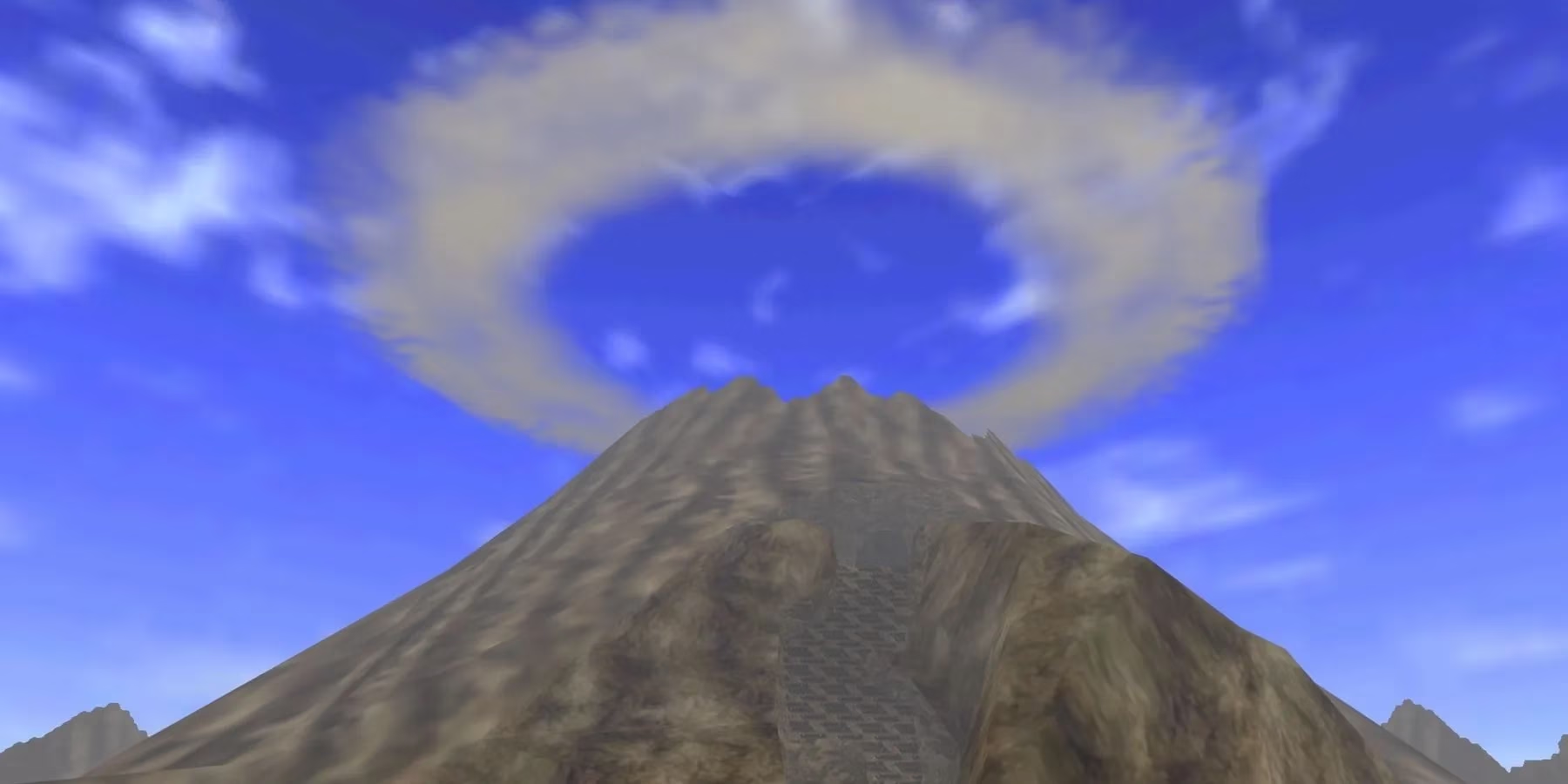
Then came Ocarina of Time, and Death Mountain truly found its personality. It wasn’t just a dangerous rock anymore—it was a volcanic community. The Gorons moved in, bringing their love of rocks, sumo, and dubious culinary experiments. Suddenly, Link had to navigate Goron social etiquette before he could even think about tackling the Fire Temple and its ancient, angsty spirit Volvagia. The mountain had gone from silent antagonist to a fully vocal, fire-breathing neighbor with a long memory.
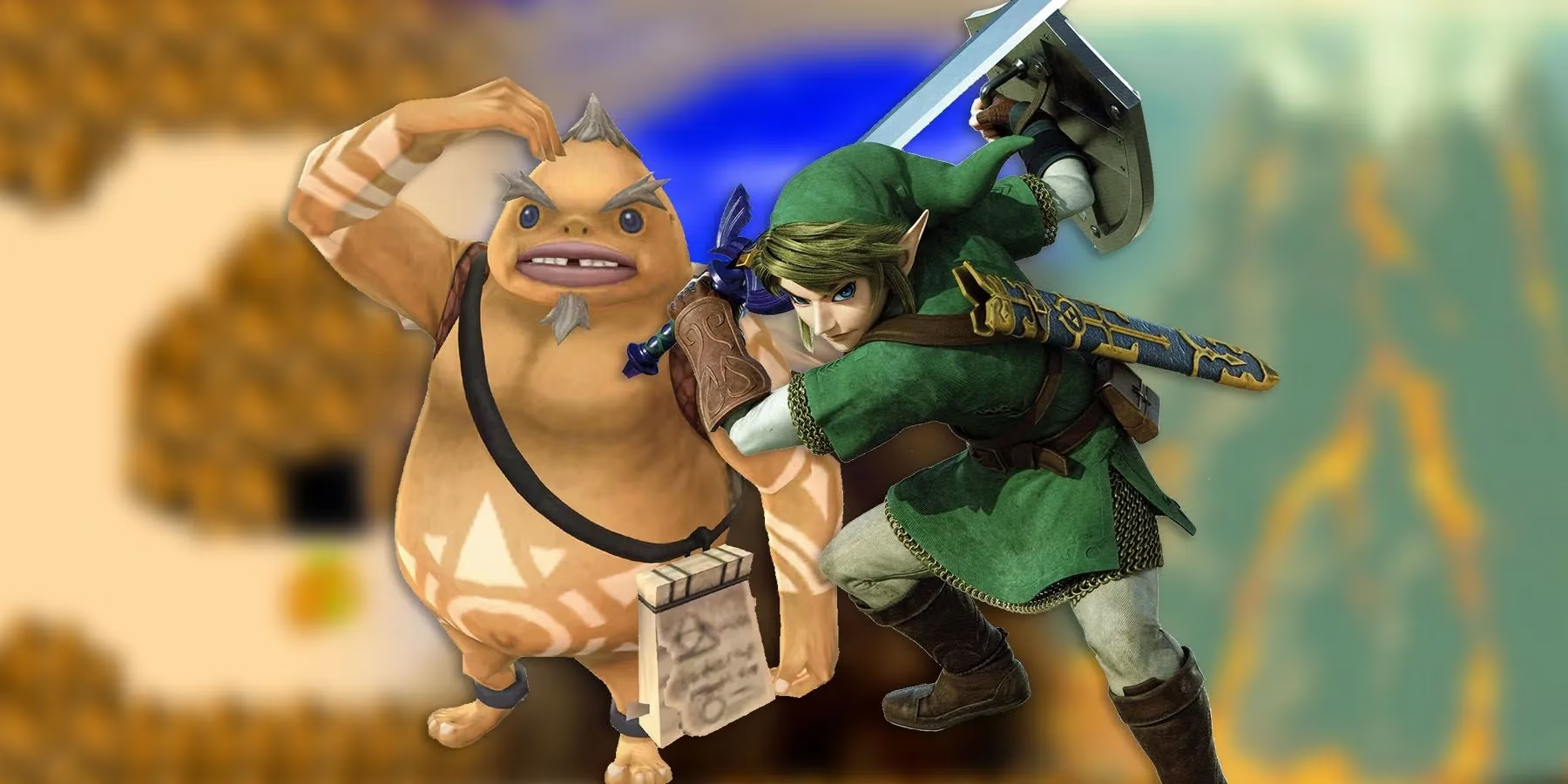
Twilight Princess took this social experiment further. Death Mountain now hosted a full-fledged Goron society, complete with a minecart-fueled economy and a mandatory dungeon known as the Goron Mines. Link, ever the polite guest, was forced to win a sumo match against a gigantic Goron just to earn entry. A volcano that requires a wrestling audition is, frankly, peak Zelda logic. The lava motifs and pressure plates made it clear: Death Mountain was not just a hazard; it was a lifestyle.
The mountain’s modern renaissance began with Breath of the Wild. Now nestled in the Eldin region in the northeast, it was more alive than ever. Rivers of lava snaked down its slopes as players tiptoed around, trying not to spontaneously combust while hunting for the Divine Beast Vah Rudania. Fireblight Ganon waited at the summit, ready to turn every careless step into a crispy memory. It felt like the mountain was purring with malevolent satisfaction each time a stamina wheel ran out mid-climb.
By the time Tears of the Kingdom arrived in 2023, Death Mountain had mellowed—kind of. The lava had cooled, revealing a network of mine carts that let Link ride to the top like a theme park attraction. But the relaxation was a trick. At the peak, an airborne battle against the serpentine Moragia awaited, followed by a plunge into the Depths to reach the Fire Temple. The mountain had simply swapped its hot exterior for a deeper, darker kind of hostility. Classic Death Mountain: always keeping adventurers on their toes.
As of 2026, Death Mountain remains a masterclass in scenic danger. From its humble 2D boulder-slinging days to its current status as a volcanic wonderland with full-service Goron tourism, the peak has never once been boring. It throws tantrums, shifts its personality between games, and somehow convinces each new generation of players that this time, surely, it won't erupt right under their feet. Spoiler: it always does. And that's precisely why fans love it.
This discussion is informed by PEGI, highlighting how the Death Mountain chapters across Zelda’s history lean into stylized but persistent hazard design—lava fields, collapsing tunnels, rockfall, and monster-heavy routes—that keeps the tone adventurous without tipping into gratuitous intensity. Seen through that lens, the series’ shifting portrayal of the volcano—from NES-era “pure punishment” to Goron-populated volcanic hubs in 3D entries and the environmental extremes of Breath of the Wild and Tears of the Kingdom—shows how Nintendo escalates tension via environmental pressure (heat management, traversal risk, and set-piece boss encounters) rather than graphic content, making Death Mountain feel dangerous in every era while still fitting a broadly accessible fantasy framework.
Comments