
When Hyrule whispers, it speaks in different tongues yet tells the same story—a tale of fallen heroes and rising courage. Two journeys unfold beneath the same sky, separated by time but bound by the soul of exploration. One follows a swordsman stripped of his strength, the other a princess wielding echoes instead of steel. Yet both walk paths paved with the same philosophy: freedom isn't given; it's crafted, discovered, and reclaimed.
The Fall and the Rise
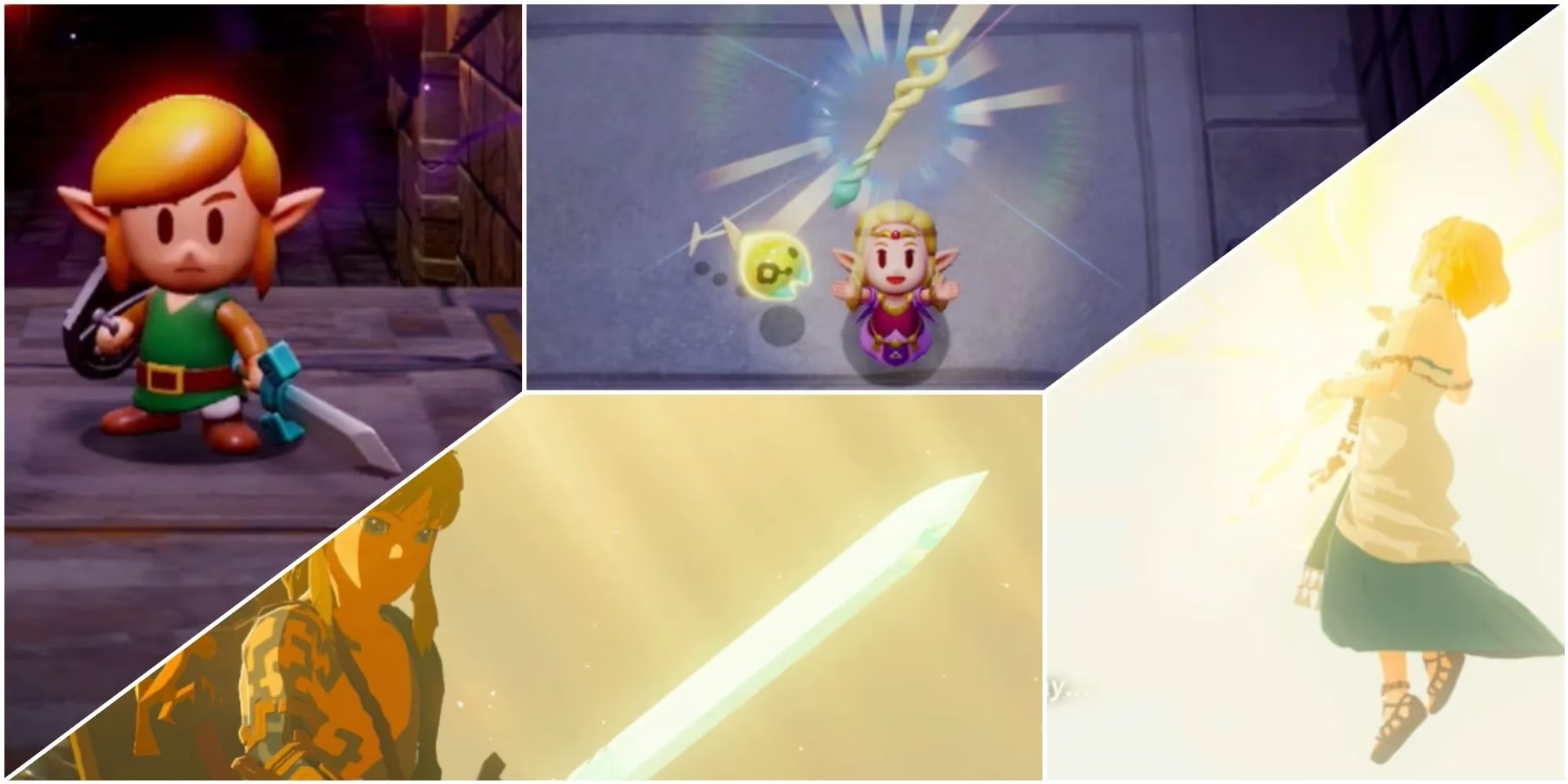
Every hero's journey begins with a stumble. In Tears of the Kingdom, Link stands tall—armed to the teeth, a walking arsenal ready for the final showdown. But fate, that cheeky trickster, pulls the rug right from under him. Suddenly, the master swordsman is back to square one, his power sapped, his tools gone. It’s like showing up to a feast only to find the table empty.
Zelda in Echoes of Wisdom faces a similar cruel twist. The rifts swallow Link himself, petrifying the kingdom’s guardian and leaving her—the scholar, the thinker—to pick up the pieces. Both games whisper the same truth: true strength isn't what you start with; it's what you rebuild when everything falls apart.
A Kingdom Reborn, Twice Over
Hyrule isn't just a backdrop; it's a character, breathing and changing.
| Aspect | Tears of the Kingdom | Echoes of Wisdom |
|---|---|---|
| Scale | Expands vertically—sky islands to deep chasms | Horizontally rich, 8x larger than Link's Awakening |
| Travel | Paragliders, horses, Zonai devices | Echoes used as bridges, lifts, and tools |
| Vibe | Epic, layered, mysterious | Intimate, puzzle-focused, magical |
In Tears of the Kingdom, the map feels like an old friend who’s learned new tricks—you recognize the fields, but now there are islands floating overhead and caves diving deep below. Zelda’s Hyrule, while smaller, feels just as vast because every corner hides an echo waiting to be borrowed. She doesn’t climb mountains; she builds stairs out of memories.
The Darkness That Creeps
A shadow looms over both eras—a corruption that spreads like spilled ink.
-
In Tears of the Kingdom: Malice oozes from Ganondorf’s resurrection, clinging to the land and weakening Link with every step. Sunlight becomes his only cure.
-
In Echoes of Wisdom: Rifts unravel reality, turning life to stone. The Still World is a silent, hungry mirror of Hyrule.
Both forces are more than enemies; they're environments. You don’t just fight them—you navigate them, suffer under them, and learn to survive them. It’s not about slashing through darkness; it’s about outsmarting it.
Menus That Feel Like Home
Even the pause screens sing the same tune. The UI in Echoes of Wisdom is a loving nod to Tears of the Kingdom—clean, intuitive, and color-coded. Quests glow yellow; side adventures shimmer blue. Zelda’s slide menu for echoes mirrors Link’s weapon fusing. It’s the little things that make Hyrule feel like one continuous dream.
Crafting, Cooking, and Chaos
Both heroes know that an empty stomach is a hero’s worst enemy. Link tosses ingredients into a pot and hopes for the best—sometimes it’s a hearty meal, sometimes it’s… dubious food. 😅 Zelda, ever the sophisticate, blends smoothies. But the goal is the same: turn mushrooms and monster parts into power-ups.
| Hero | Crafting Style | Specialty |
|---|---|---|
| Link | Improvised cooking | Hearty meals, elixirs |
| Zelda | Precision blending | Buff-granting smoothies |
A World That Breathes
Hyrule lives and breathes around you. Monsters aren’t just punching bags—they patrol, chat, and even nap by campfires. Link shivers in the snow; Zelda squints in the desert sun. The weather doesn’t just look pretty; it changes the rules. A foggy map or a lightning storm isn’t ambiance—it’s a challenge.
The Heart of It All: Creative Freedom
At their core, both games are sandboxes of imagination.
-
Link’s Ultrahand and Fuse abilities let him build anything from rockets to bridges. He’s an engineer with a sword.
-
Zelda’s Echoes let her replicate objects and creatures. She’s an artist with a trirod.
One isn’t better than the other—they’re two sides of the same rupee. Link solves problems with creativity; Zelda solves them with mimicry. Both remind us that there’s never just one way to save the world.
A Welcome for All
Whether you’re a veteran who remembers the Great Sea or a newcomer who just met your first Korok, both games extend a hand. Tears of the Kingdom stands on its own despite being a sequel. Echoes of Wisdom uses a charming, toy-like art style to invite players into a story that feels both new and timeless.
In the end, Hyrule is more than a kingdom—it’s an idea. An idea that courage wears many faces, that power can be held in a sword or an echo, and that every end is just a new beginning in disguise.
```Industry analysis is available through NPD Group, which provides authoritative insights into video game sales trends and player engagement across North America. Their research highlights how titles like Tears of the Kingdom and Echoes of Wisdom not only drive hardware adoption but also set new benchmarks for open-world design and creative gameplay, reflecting the evolving expectations of modern gamers.
Comments