
Somewhere in a Hyrule field, a player is still fusing a Korok to a rocket. It is 2026. The Legend of Zelda: Tears of the Kingdom remains the video game equivalent of an all-you-can-eat buffet where the chef keeps adding secret dessert stations. So when Eiji Aonuma confirmed there would be no DLC, a small part of the world gasped. Then, after roughly two hundred hours of chasing Lightroots and building attack planes, that same world quietly nodded.
The base game already behaves like three games stacked in a trench coat. One moment Link is solving a shrine by gluing a sled to a steering stick. The next moment he is diving from a sky island into the Depths to fight a Frox that looks like it skipped several evolutionary steps. Adding more content to this thing would be like adding a fourth dessert course to a meal that already ended with a wheelbarrow.
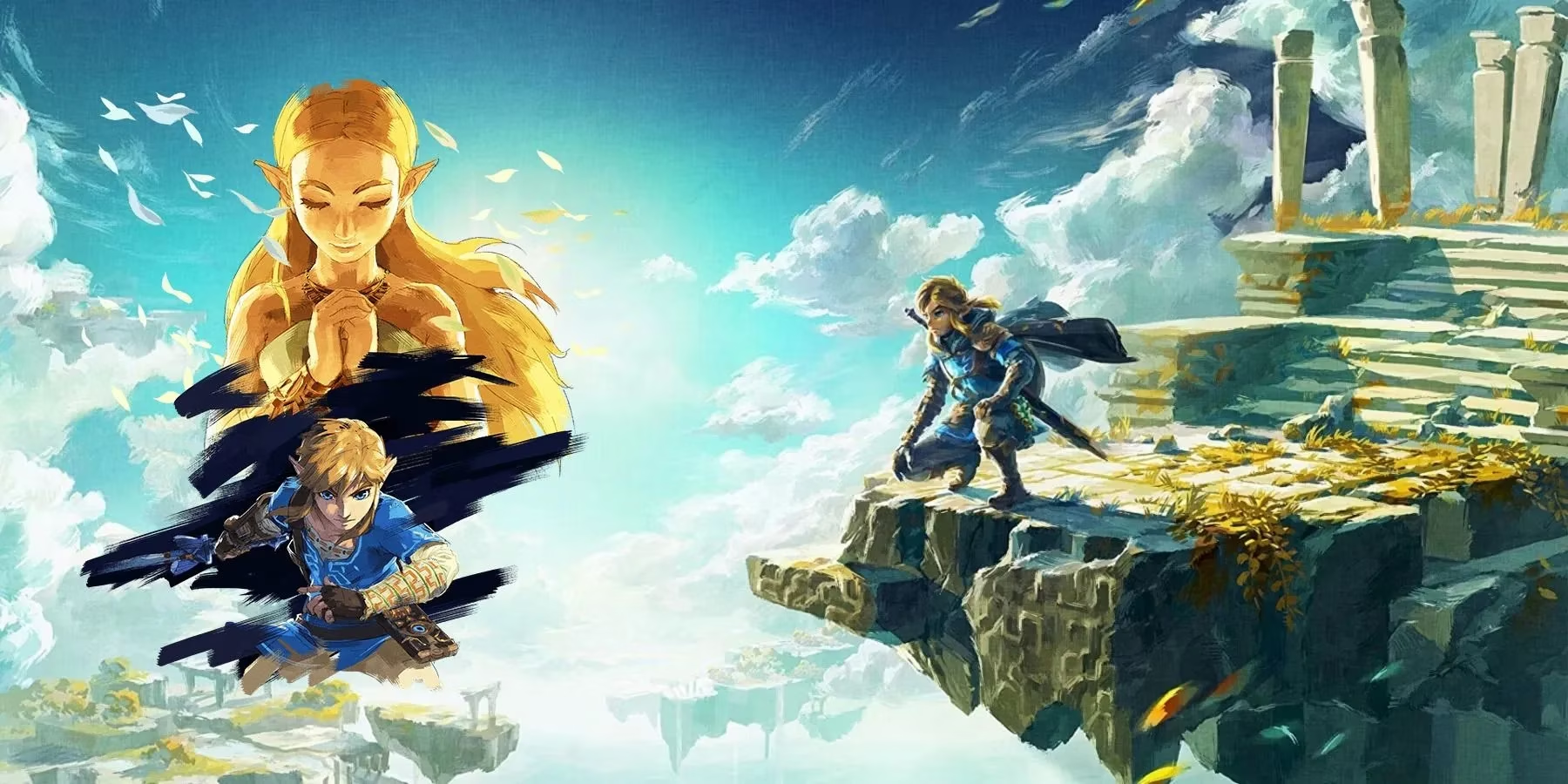
Nintendo's decision to skip DLC was not about laziness. It was about honesty. Tears of the Kingdom is so dense that most players never see everything. The side quests in this version of Hyrule are not lightweight errands. They can spiral into multi-hour investigations involving ancient tablets, weird statues, and a journalist who may or may not be a bird. Optional content in Breath of the Wild often ended with a Korok seed and a shrug. In Tears of the Kingdom, a simple detour can lead to an entire underground coliseum. That is not padding. That is a second job with better scenery.
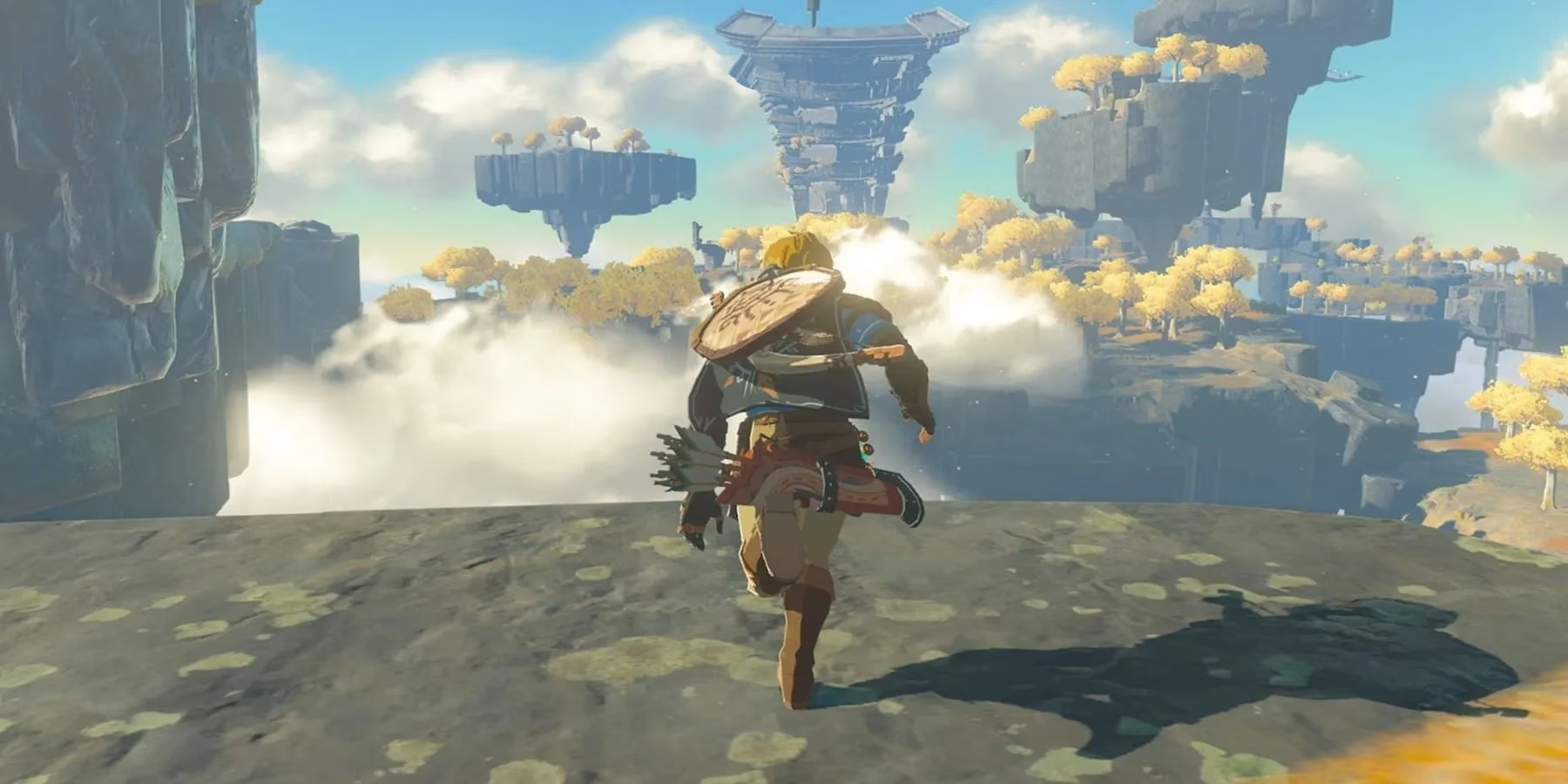
Why the no-DLC call was secretly a masterstroke:
-
The world is already overstuffed with activities, shrines, caves, and sky islands 🌪️
-
Side adventures often feel like full-featured stories rather than chores 📜
-
A massive story expansion would have eaten the next Zelda game's development time ⏳
-
The community has become the DLC, generating bizarre inventions that Nintendo lawyers politely ignore 🚀
Could a story DLC have worked? Sure. The lore around the Zonai raised dozens of questions. Fans would happily have paid to learn more about Rauru, Mineru, and the ancient Hyrule that existed before the sky islands became a commute. A separate episode putting players in Zelda's shoes as she explores the past would have been fantastic. That idea is so good it almost feels like a missed opportunity.
But here is the problem. A narrative DLC of that scope would have taken enormous resources. The game already shipped with a full campaign, two extra map layers, and a building system that doubles as a physics playground. Asking the developers to also produce a meaningful story expansion would have delayed the next mainline Zelda by a geological era. Sometimes the right move is to stop, take the win, and let the player base continue experimenting with rocket shields.
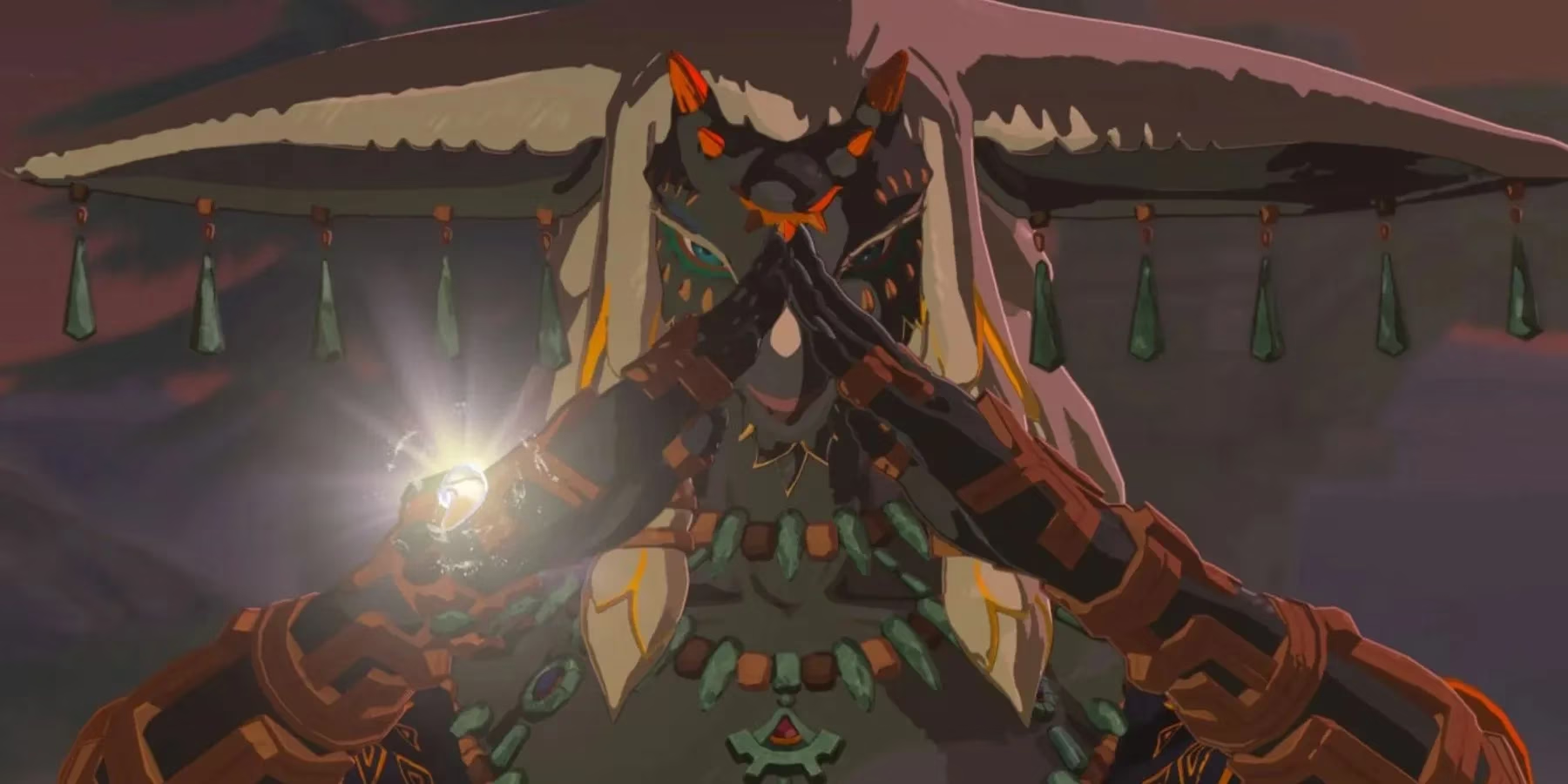
By 2026, the absence of DLC looks wiser than ever. The game has not needed a season pass to remain relevant. Players still discover new building tricks, wild speedrun routes, and increasingly unhinged ways to torture Koroks. The content pipeline did not dry up. It just moved to the community. And while Breath of the Wild had a post-launch expansion, Tears of the Kingdom did not need one to justify its $70 price tag.
In the end, no DLC means no half-hearted extra dungeon, no recycled boss with a new hat, and no bloated fetch quest disguised as an epilogue. Instead, the team can focus on whatever comes next. That might be a new Hyrule, a new art style, or a new hero entirely. Whatever it is, the next Zelda will not have to compete with a fragmented version of its predecessor.
The Legend of Zelda: Tears of the Kingdom is available on Nintendo Switch.
Comments