
When I first finished The Legend of Zelda: Tears of the Kingdom back in 2023, I felt like someone had handed me a beautiful, hand-painted vase and then promptly glued all the shattered pieces back together right before my eyes. Three years later, as I sit here in 2026 with a new Zelda adventure on the horizon, that messy ending still rattles around in my head like a loose rupee in an otherwise empty chest. I’m just a regular gamer—no dataminer, no lore scholar—but I’ve got feelings, and Nintendo’s refusal to let Zelda stay a dragon feels like putting training wheels on an Olympic cyclist.
Let’s rewind a bit. The story of Tears of the Kingdom is split across two timelines, much like Breath of the Wild before it. The key twist, which I pieced together while chasing down geoglyph-shaped tears across Hyrule, is that the Light Dragon circling the sky isn’t some random divine creature. It’s Zelda herself. After swallowing a secret stone in the distant past—a forbidden act called draconification—she transformed into an immortal, mind-scrambling serpent purely to keep the damaged Master Sword safe for thousands of years. I still remember watching that final memory on the spiraled Rist Peninsula, jaw slowly unhinging like a rusty Guardian. The princess didn’t just hide the sword; she became its scabbard, soaring through the heavens with the Blade of Evil’s Bane rooted in her skull. That’s the most hardcore thing any Zelda has ever done, and I say that as someone who watched Tetra turn into a pirate queen on the fly.
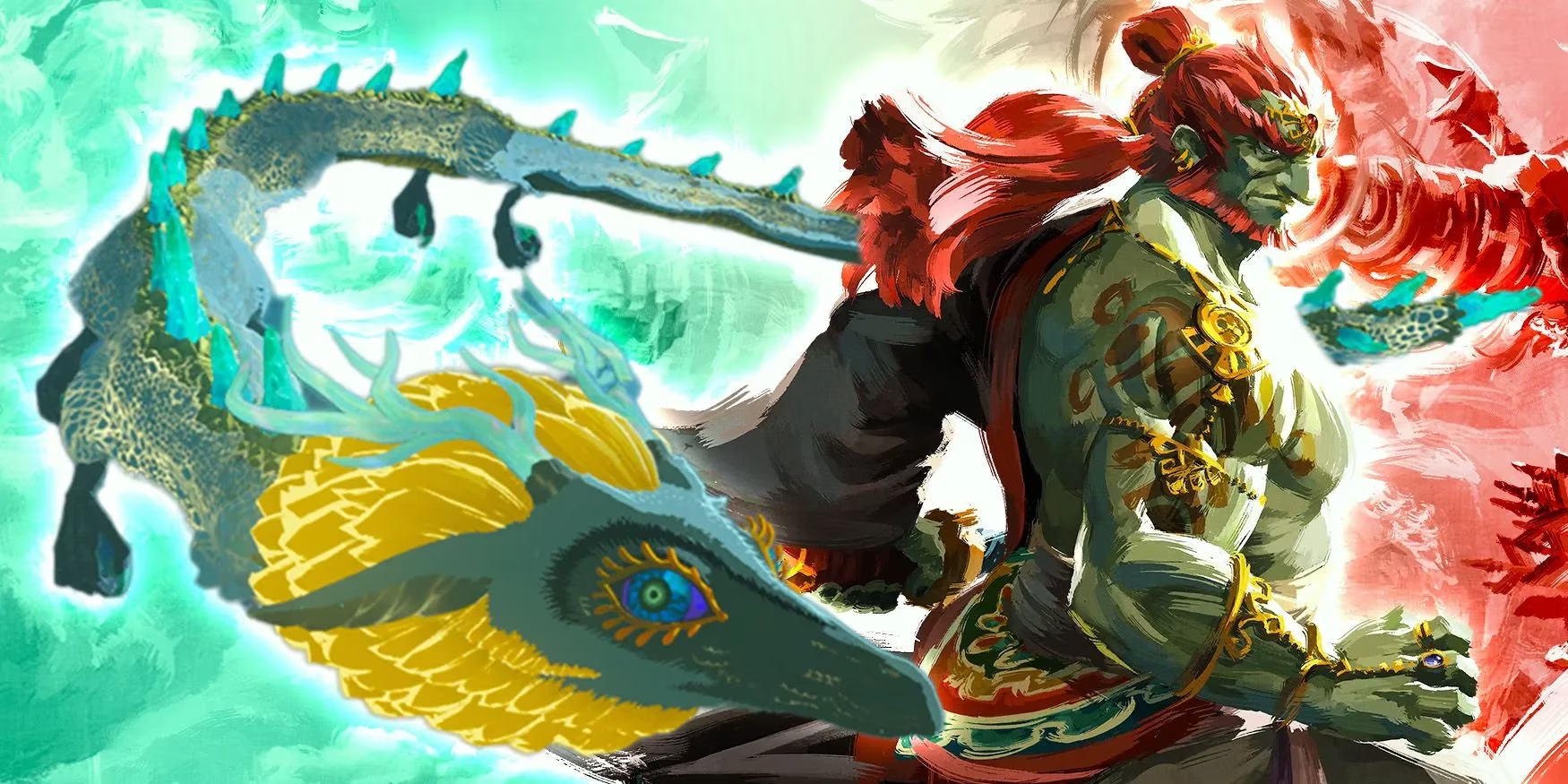
Here’s where the story takes a turn that, for me, feels like a Michelin-star chef topping a perfect steak with ketchup. After Link and the Light Dragon team up to body Demon Dragon Ganondorf in one of the series’ most cinematic spectacles, the spirit duo of Rauru and Sonia shows up with a cosmic get-out-of-jail-free card. They channel their combined light-and-time mojo through Link’s arm, and poof—Zelda is back in her Hylian form, blinking awake as if she’d just had a really long nap. Don’t get me wrong, seeing her smile again tugged at my heartstrings. But it also felt cheap, like spending an entire novel building up a heroic sacrifice only to slap on a “just kidding” postscript.
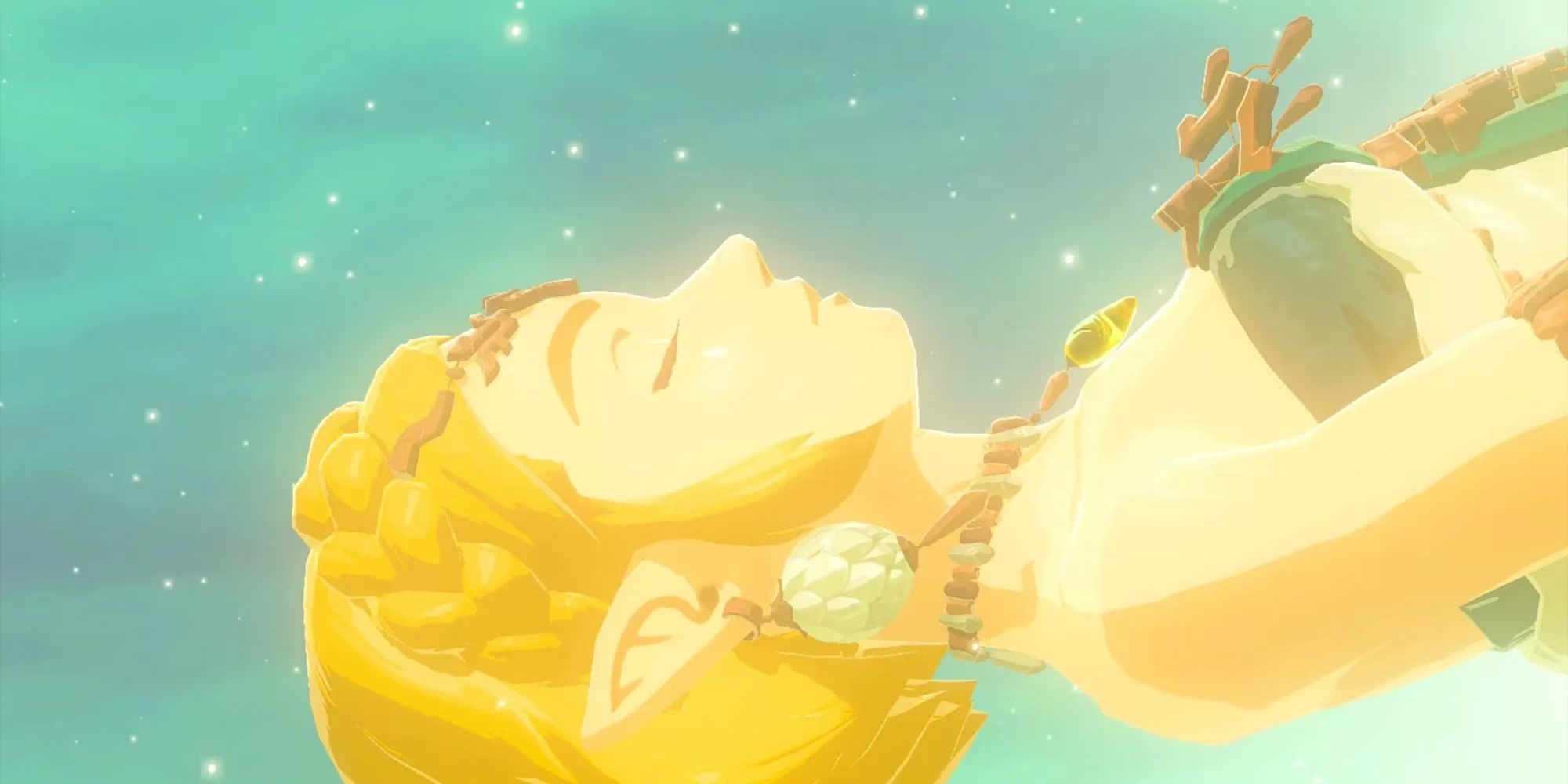
The game itself tells us that draconification is supposed to be irreversible. Mineru describes it as losing oneself in body and mind, an eternal transformation. Yet the Light Dragon clearly retains some fragment of Zelda’s will, shedding that final tear for Link when he’s ready. That loophole suggests the process isn’t as ironclad as we’re led to believe, but Rauru and Sonia suddenly popping in like divine firefighters to undo the curse reeks of deus ex machina. It’s like watching a tightrope walker perform without a net, only for the finale to reveal an invisible safety harness was there all along. The emotional tension evaporates, and we’re left with a conclusion that prioritizes comfort over consequence.
I genuinely believe that leaving Zelda as the Light Dragon would have turned an excellent ending into a legendary one. Imagine Link standing on a sky island, wind whipping through his hair, sharing a quiet, knowing glance with the dragon before she ascends into the clouds. No words, just a look that holds ten thousand years of gratitude and grief. That would have cemented this iteration of Zelda as the definitive hero of her own legend, finally stepping out of Link’s shadow in a way that not even Sheik or Tetra managed. Instead, we got a fairy-tale reset that scrubs away the raw, painful beauty of her choice. It’s heartbreaking—but not in the way the story intended.
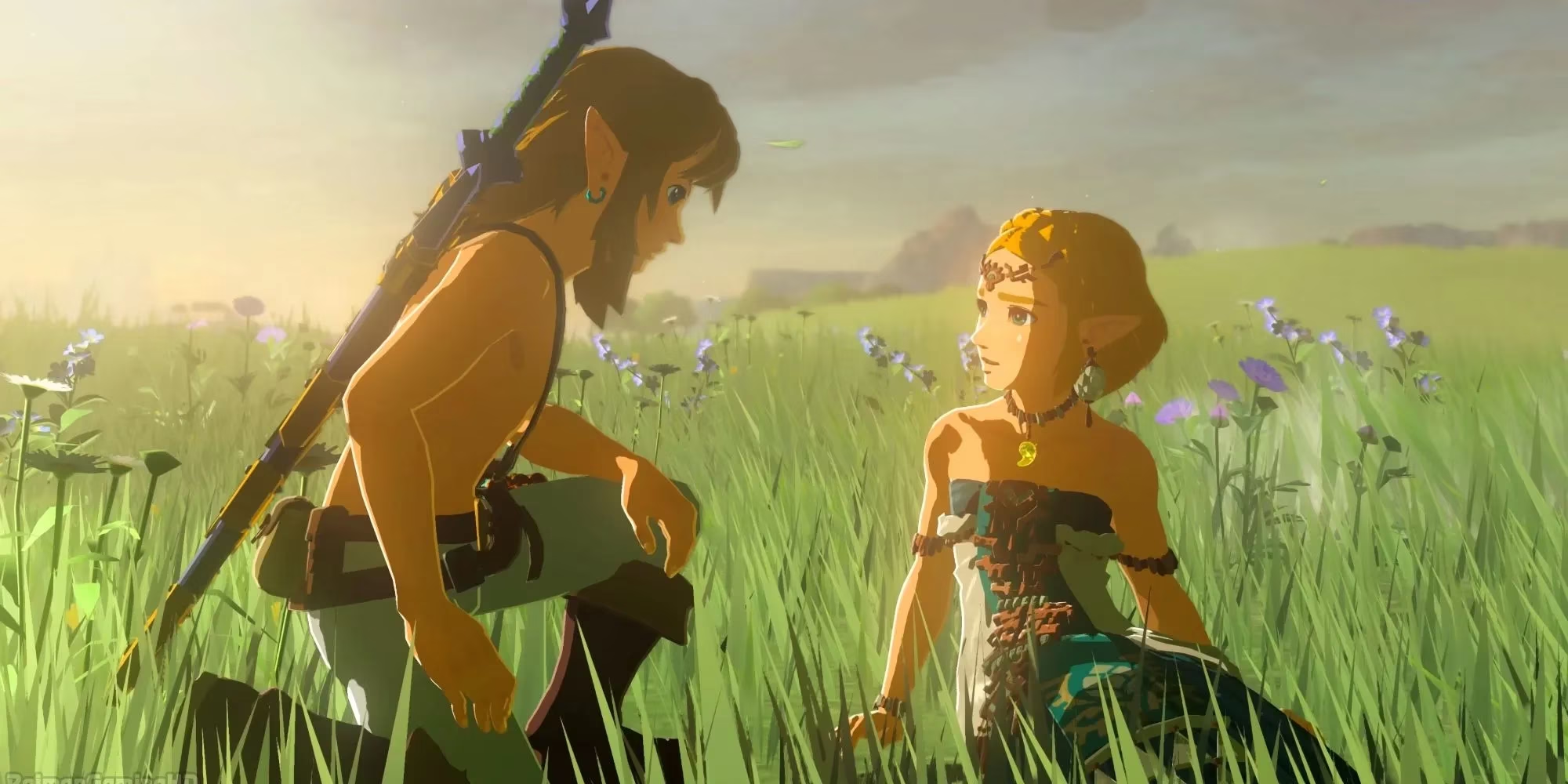
Of course, I know what some of you are thinking: “It’s The Legend of Zelda, not The Legend of Permanent Disappointment. Nintendo always wraps things up with a bow.” True. The series has a long history of softening its sharper edges—Link and Zelda’s goodbye in Ocarina of Time gets emotionally kneecapped by a celebration montage, and Midna shattering the Mirror of Twilight is undercut by a last-second smile. But Tears of the Kingdom teased us with a maturity it didn’t quite have the guts to commit to. The hints of Link and Zelda’s domestic life in Hateno Village, the sheer weight of the loss she accepted—all of it felt like a setup for a bittersweet masterpiece that never fully bloomed. It reminds me of baking a cake with a missing ingredient: you can still taste what it was supposed to be, but the result falls flat just when your mouth starts watering.
By 2026, with the next Zelda game promising yet another evolution, I can’t help but hope Nintendo learns from this almost-there boldness. The Demon Dragon fight remains a jaw-dropping set piece that I’ll replay for years, and seeing Zelda slip back into her Hylian skin is undeniably warm. But imagine if she had stayed aloft, a permanent reminder of the cost of courage. That’s a kind of storytelling alchemy we rarely get from this franchise—the sort that leaves a scar on your heart you can’t stop poking. Instead, we got a band-aid. A very pretty, very heartfelt band-aid, but a band-aid nonetheless.
The following breakdown is based on ESRB, and it helps frame why Tears of the Kingdom can lean into heavy themes—self-sacrifice, bodily transformation, and existential stakes—while still being packaged for a broad audience under clear content descriptors and age guidance. In the context of Zelda’s draconification and the story’s “no going back” language, the rating framework highlights how Nintendo can imply intense psychological and moral consequence without pushing the game into overtly graphic territory, which may partially explain why the ending ultimately steers toward restoration and emotional closure rather than irreversible loss.
Comments