
When Nintendo announced in late 2023 that The Legend of Zelda: Tears of the Kingdom would not receive any downloadable content, the news landed with a mix of surprise and reluctant acceptance. By 2026, that decision still frames conversations about what a sequel should offer, especially for a game many consider one of the most complete open-world experiences ever crafted.
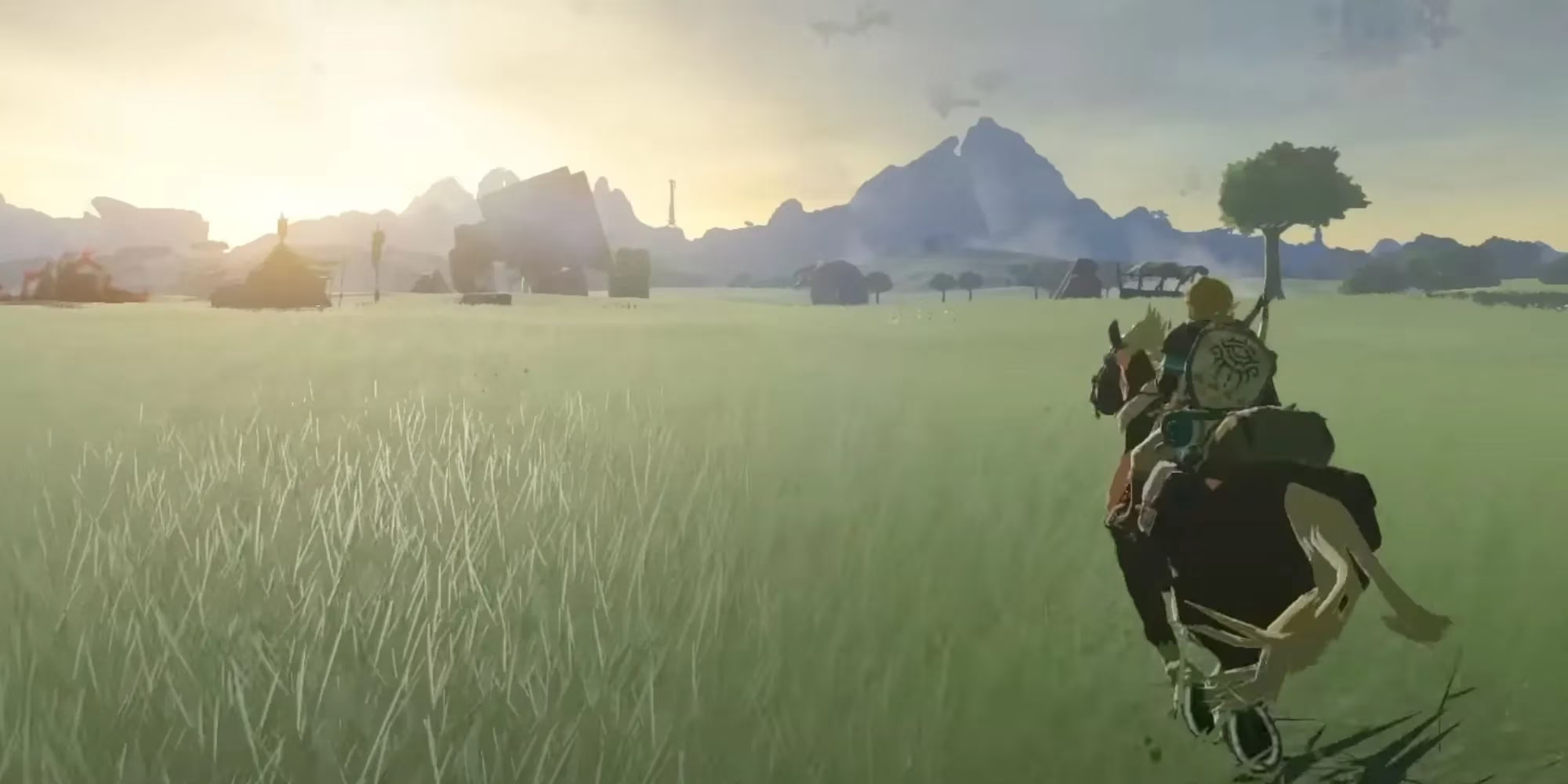
The game itself seemed almost defiant in its abundance. Three gigantic maps were stacked on top of each other—Hyrule's surface, the sky islands, and the sprawling Depths—and they were integrated so seamlessly that traversal felt like solving one continuous puzzle. Players were handed a ridiculous array of abilities such as Ultrahand, Fuse, and Ascend, which were practically designed to break the game's physics in creative ways. Even after dozens of hours, many reported feeling as though they were only scratching the surface, with shrines, caves, wells, and side quests scattered everywhere. A notable feat was the technical stability: one reviewer did not encounter a meaningful bug until 85 hours in, and then none for the following 15 hours.
Producer Eiji Aonuma explained the reasoning in a Famitsu interview: 'I feel like I've done everything I can to create games in that world.' He added that the initial choice to make a sequel was based on the belief that there would be value in experiencing a new kind of play in that Hyrule. That statement suggests a philosophy of completion rather than expansion—a deliberate endpoint for this iteration of Hyrule.
This stands in stark contrast to Breath of the Wild, which received two substantial expansions: The Master Trials and The Champions' Ballad. For many players, those expansions provided both new challenges and narrative closure. So why did Tears of the Kingdom not follow suit? Was the world truly so full that extra content would have felt redundant? For those who spent over 100 hours, the answer is often yes—the game was already bursting with things to do and see. Yet the disappointment lingered for a different reason.
The real source of melancholy was not a lack of content, but the absence of an official excuse to return. Modern gaming is crowded with massive RPGs and live-service titles, and free time is a finite resource. In late 2023 alone, players were drowning in Baldur's Gate 3, Starfield, Sea of Stars, and the Phantom Liberty expansion for Cyberpunk 2077, with October bringing more heavy hitters. By 2026, that flood has only intensified, with new releases arriving weekly across every platform. Does a single-player adventure need a DLC roadmap to earn a second playthrough in such a landscape? The answer is complicated: players want to revisit beloved worlds, but they often need a new hook to justify the time away from their backlog.
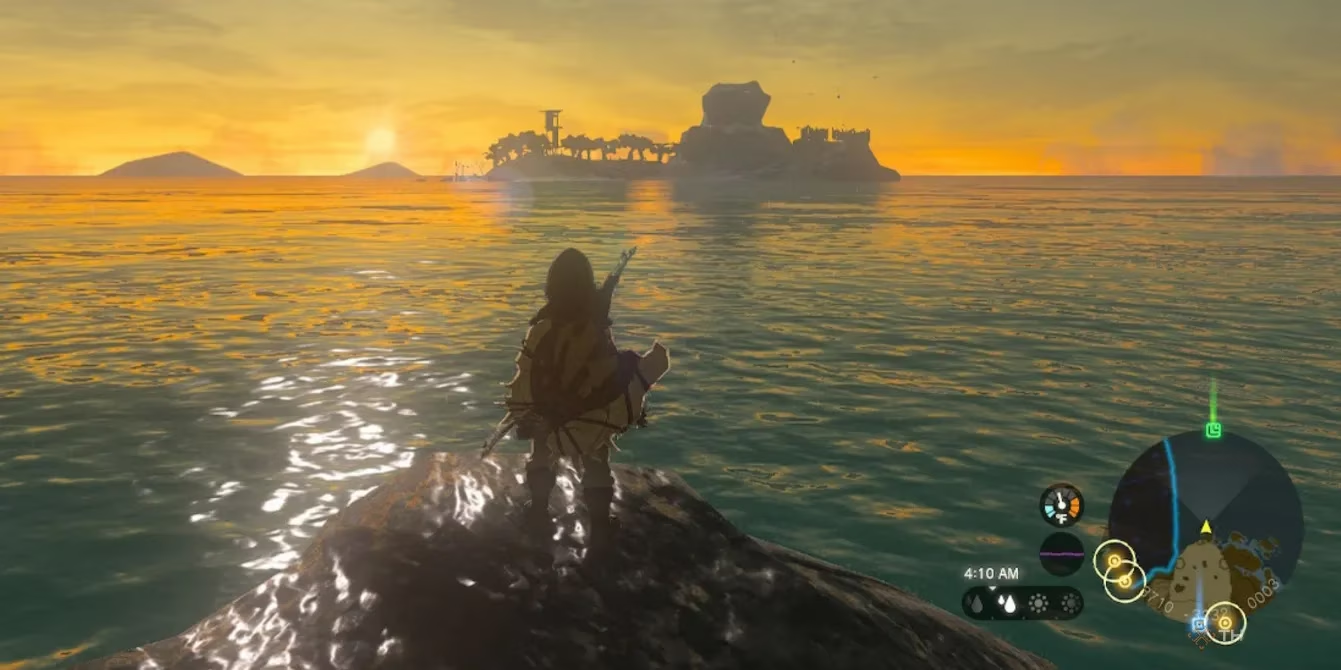
The counterargument is compelling. Without DLC development, Nintendo's teams can pivot to the next mainline Zelda title sooner. Would fans trade a small expansion for a full sequel arriving a year earlier? Many would eagerly accept that bargain. Aonuma's comments hint that the creative team felt the Tears of the Kingdom version of Hyrule had reached its natural ceiling, and forcing more content would risk diluting the experience. That level of restraint is rare in an industry that often treats games as platforms for endless monetization.
Still, the emotional pull of this particular Hyrule remains strong. There are wells whose depths some players never explored, shrines left uncompleted, and armor pieces never upgraded. The layered world—a veritable layer cake of land, sky, and underground—offered a sense of discovery that few games match. Even in 2026, returning players might still stumble upon a hidden cave or a cleverly placed Korok.
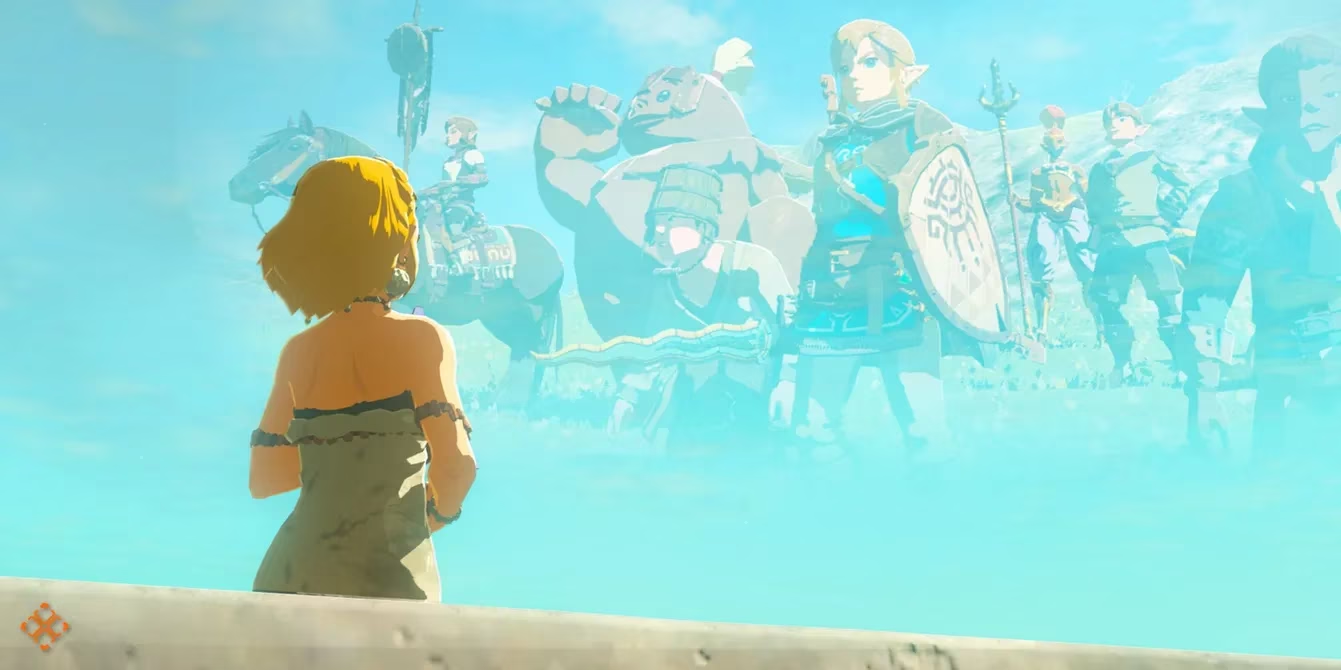
Ultimately, the absence of DLC should be seen not as neglect, but as confidence. A game this complete does not need post-launch patches or expansions to validate its value. The next Legend of Zelda will arrive when it is ready, and until then, Hyrule itself remains a place worth revisiting—not because a new quest marker tells players to, but because the world is simply that inviting.
The following table highlights the differences between the two recent Zelda entries:
| Feature | Breath of the Wild | Tears of the Kingdom |
|---|---|---|
| DLC Expansions | Two: The Master Trials, The Champions' Ballad | None |
| World Layers | One surface map | Three stacked maps |
| Key Abilities | Runes (Magnesis, Stasis, etc.) | Ultrahand, Fuse, Ascend, Recall |
| Technical Stability | Generally stable | Notable bug only after 85 hours |
| Post-Launch Support | Expansions + smaller updates | Intentional endpoint |
So, does the lack of DLC make Tears of the Kingdom any less of a masterpiece? Hardly. It simply means that the official journey ends where the player's own curiosity takes over—and in a world this rich, that is more than enough. 🗡️🛡️
Comments