
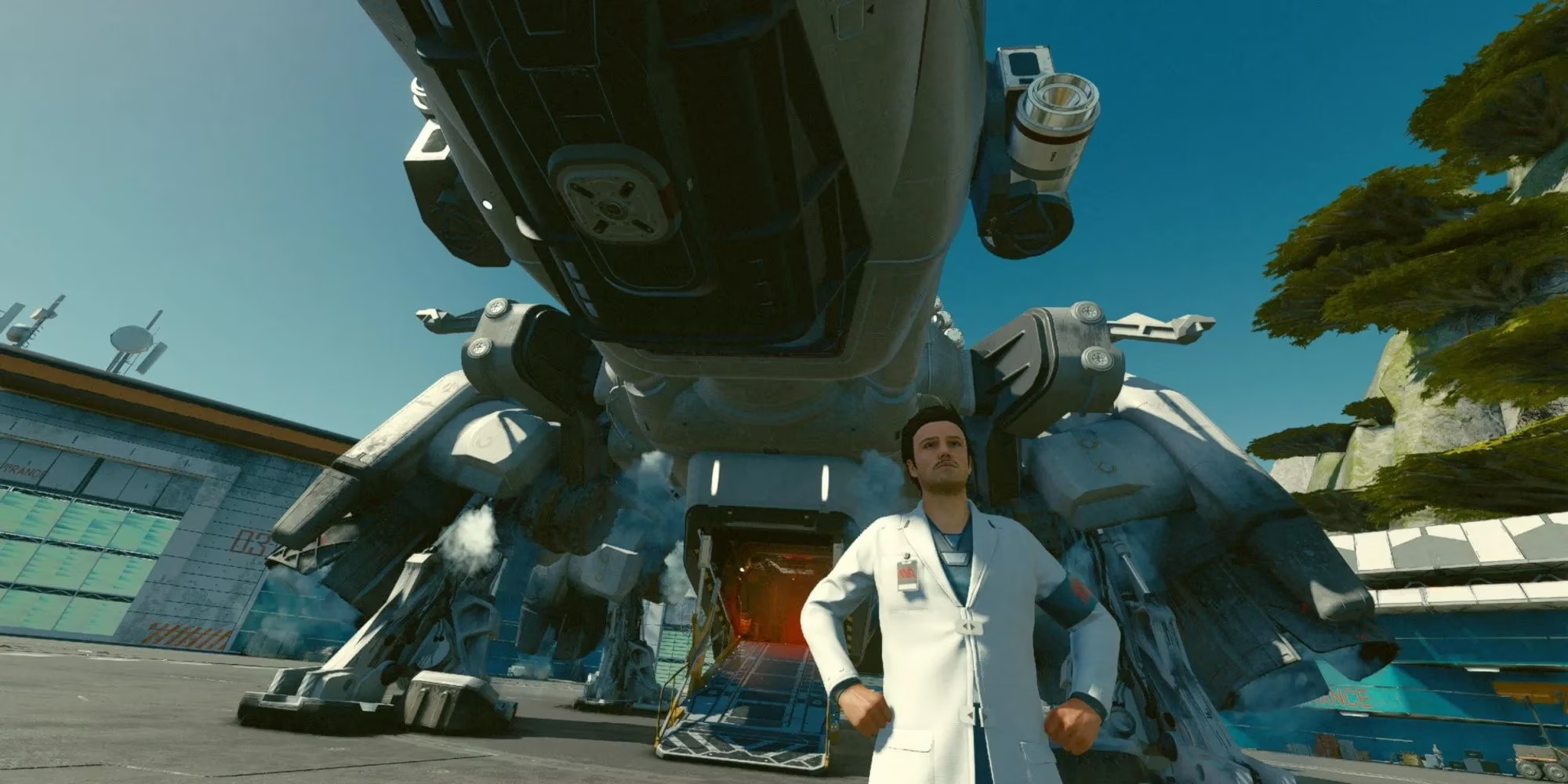
The cargo bay of Alex's ship lay strewn with contraband art, rare resources, and an unsettling number of succulents—all frozen in a digital purgatory because the game had decided his pockets were full. He stared at the flashing “ENCUMBERED” warning, his character rooted to the metallic floor like a tree condemned to witness every autumn pass without release. Across the galaxy, thousands of other explorers were facing the same curse, their interstellar odyssey reduced to a slog through invisible molasses. Starfield had turned hoarding into a philosophical crisis, and Alex was losing.
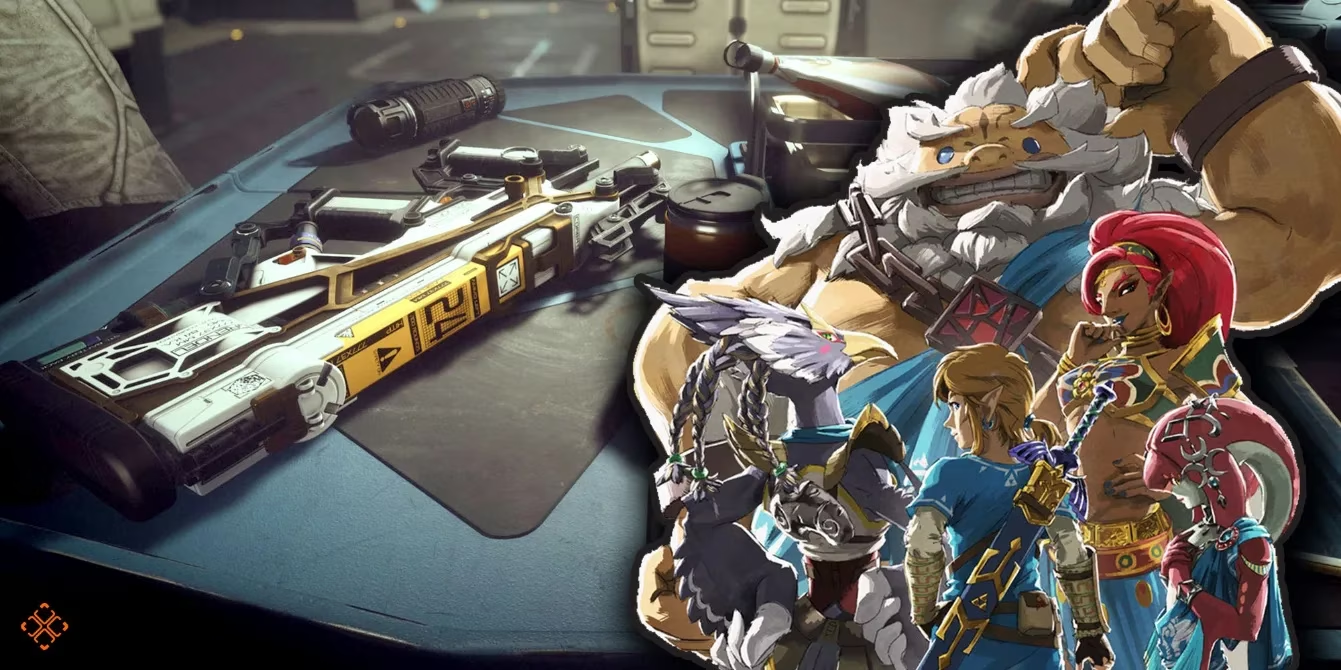
When Bethesda’s space epic finally launched back in 2023, the weight limit debate ignited faster than a malfunctioning grav drive. Many had hoped the Xbox exclusive would be a flawless flagship, but instead it handed players a rulebook that measured joy in kilograms. The term encumbrance—a word most people have never spoken aloud—became a daily curse. Unlike other RPGs that treat inventory caps as mere suggestions, Starfield treated them like the laws of thermodynamics: carry too much, and the universe punishes you by snatching away fast travel and stamina regeneration. It was realism as a blunt instrument, hammering the player’s desire to collect every shiny object into a manageable pile of compromises.
In the three years since, the community has fractured along familiar fault lines. Some praise the mechanic as a necessary anchor, a gravitational force that prevents the fantasy from floating into absurdity. Others see it as a design vestige that should have been jettisoned, arguing that forcing players to abandon loot in a game about exploration is akin to asking a painter to work with a brush that snaps every ten strokes. The parallel to another famous controversy is too sharp to ignore: the weapon durability system in The Legend of Zelda: Breath of the Wild, a system that returned in Tears of the Kingdom with a clever mutation.
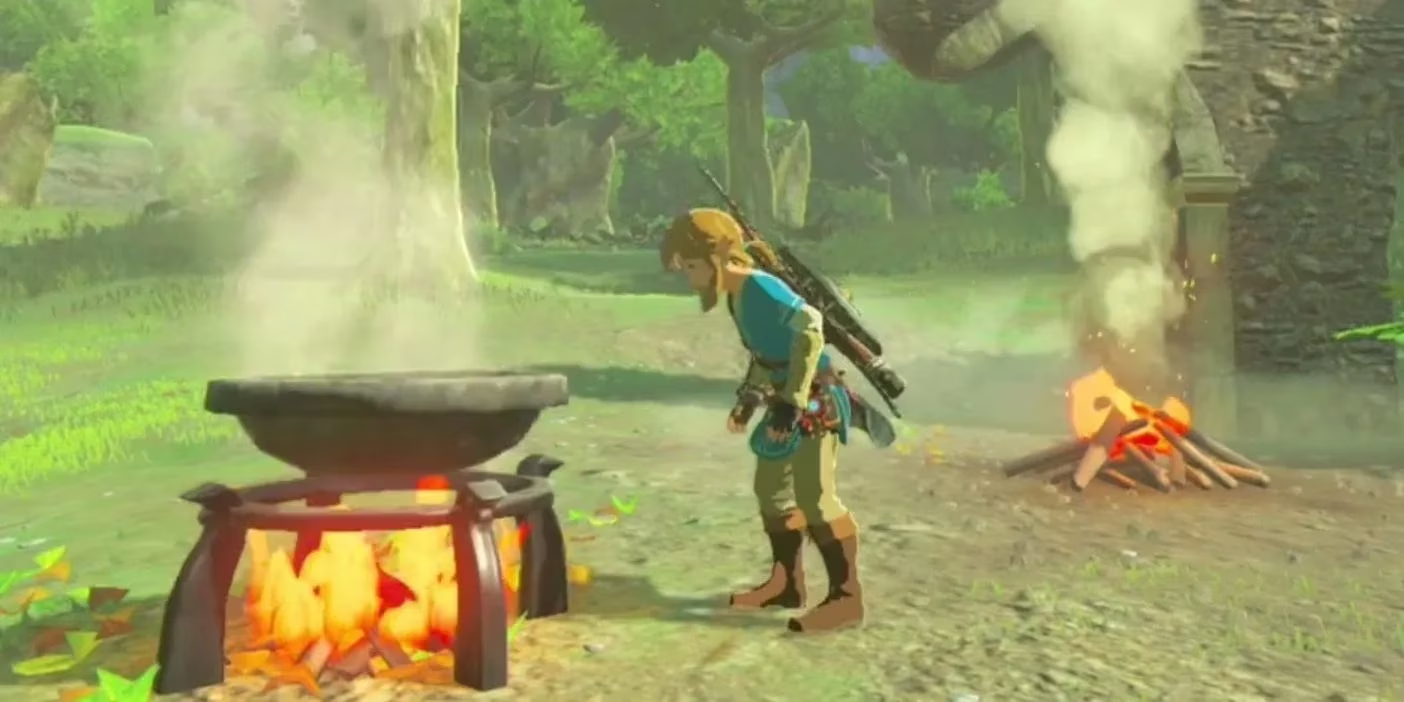
Nintendo, like a chef who realizes their soup is too salty but instead of diluting it, adds a secret garnish that transforms the dish, introduced the Fuse ability. Instead of simply breaking and vanishing, weapons could now be merged with objects in the world, extending their life and multiplying their power. A rusted sword fused with a fire-breathing lizard horn became a flaming blade with doubled endurance. The mechanic didn't remove degradation; it made the player an active participant in the crafting of durability. The debate, which had raged like a wildfire through the Zelda fandom for years, suddenly quieted. Players were no longer victims of entropy—they were alchemists.
Between these two poles, the design philosophy of FromSoftware sits like a brooding monolith, never apologizing for inconvenience. Dark Souls and Elden Ring have built entire lifetimes on the premise that friction is faithful to the experience. Every lost soul, every broken weapon, every step weighted with the risk of losing everything is not a flaw but a feature—a thorny stem that makes the eventual bloom of victory more fragrant. To many, Starfield’s encumbrance feels closer to this punishing scripture than to the adaptable systems of other open-world giants. Yet Bethesda’s universe lacks the grim poetry to justify it fully; it becomes a dull ache rather than a meaningful trial.
To understand why these limits persist, one must view them not as errors but as echoes of a deeper question: should a game world be bound by rules that mimic reality, even when that reality is a distant galaxy or a fairy-tale kingdom? The weight cap in Starfield is like a tightened watch spring—it keeps the mechanism running but makes every tick a conscious effort. Without it, the game might dissolve into a power fantasy where every player becomes a cosmic pack mule. With it, the tension between desire and limitation becomes the silent storyteller, whispering that you cannot take everything with you, not across the black sea of stars, not through the ruins of Hyrule.
By 2026, mods have long since untethered the carry limits for PC players, and Bethesda has added a few quality-of-life tweaks—companion training, enhanced weightlifting perks—but the core mechanism remains. It stands as a testament to a belief that resistance shapes character, that a game without boundaries is a sky without gravity. Yet the difference between Starfield and Tears of the Kingdom is telling: one gave players a wall, the other taught them to build doors. In the end, Alex learned to let go of his succulent collection, converting them into credits and gear upgrades, and discovered that the real weight he shed was not measured in mass but in the realization that a universe full of stuff is only as heavy as the value you assign to it. The encumbrance debate will likely never die, but it will continue to evolve—into new games, new compromises, and new ways of asking the oldest question in interactive art: how much reality is too much?
Comments