
In an electrifying revelation that has sent shockwaves through the gaming community, the epic masterpiece The Legend of Zelda: Tears of the Kingdom was a mere breath away from being crowned with a completely different, far more spoiler-heavy moniker! According to legendary Nintendo producer Eiji Aonuma, the game we all know and worship was perilously close to being unveiled as Tears of the Dragon. This bombshell, unearthed from the sacred pages of the Tears of the Kingdom Master Works art book, paints a picture of a last-minute, heart-stopping decision that forever altered gaming history. Imagine a world where the title itself whispered the game's most profound secret from the mountaintops! The very notion sends chills down the spine of every devoted fan who embarked on that emotional journey.
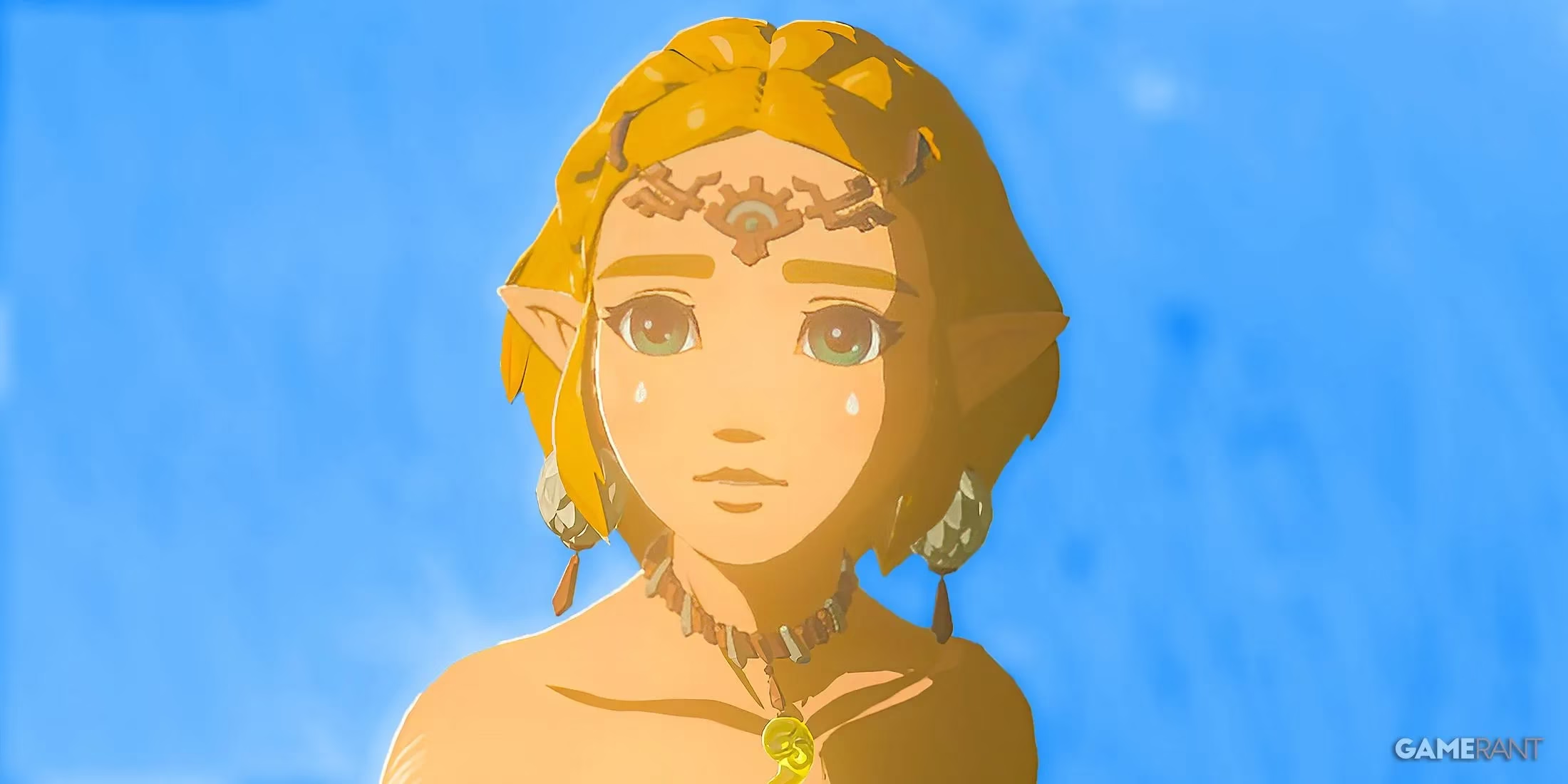
The Dragon's Whisper: A Title That Almost Spilled the Secret 🐉
The core of this seismic naming drama orbits around one of Tears of the Kingdom's most magnificent and heartbreaking enigmas: the Light Dragon. For the uninitiated, this celestial, serpentine being soaring through the skies of Hyrule is not merely a majestic creature; it is the physical manifestation of Princess Zelda herself, having consumed a Secret Stone to become an immortal dragon to aid Link across the millennia. This transformation is the pivotal narrative twist, a revelation that lands with the force of a Master Sword strike to the heart.
Eiji Aonuma confessed that Tears of the Dragon was not just a fleeting idea—it battled its way to the final round of candidate names! The title was a direct, unambiguous nod to the luminous leviathan central to the plot. Yet, this very clarity became its fatal flaw. The veteran producer stated, with the gravity of a sage imparting ancient wisdom, that "letting it slip that the Light Dragon is Zelda would have been a problem." Nintendo's paramount fear was catastrophically spoiling the emotional core of the adventure before players even pressed start. They envisioned millions of fans seeing the title and instantly connecting the draconic dots, robbing them of that gasp-inducing, tear-jerking moment of discovery. The potential for narrative ruin was simply too high.
The Logo Conundrum: A Visual Spoiler Avoided 🎨
The title debate was inextricably linked to another critical creative element: the game's official logo. For years, the development team had fantasized about incorporating elegant, minimalist dragon motifs into the emblem. Imagine a logo intertwined with the graceful, flowing form of the Light Dragon—a symbol of power, mystery, and sacrifice. However, this tantalizing visual concept met the same formidable wall as the proposed title.
🔍 The Spoiler Paradox Table:
| Element | Proposed Idea | The Spoiler Risk | Final Decision |
|---|---|---|---|
| Title | Tears of the Dragon | Directly hints at Zelda's draconic fate | REJECTED ❌ |
| Logo | Minimalist Light Dragon design | Visually reveals a key story entity | REJECTED ❌ |
| Outcome | Tears of the Kingdom & abstract logo | Preserves the monumental secret | APPROVED ✅ |
Aonuma revealed that the desire to protect the story's sanctity made the company "reluctant" to proceed with any draconic imagery in the logo. Thus, both the provocative title and the beautiful logo concept were sacrificed on the altar of preserving player surprise. This demonstrates Nintendo's fanatical dedication to the purity of the player experience, valuing emotional impact over overt symbolism.
The Eleventh-Hour Salvation: Birth of "Tears of the Kingdom" ⏳
As development raced against the clock, with time becoming a scarcer resource than Zonai Energy Cells, the pressure to finalize a name reached a fever pitch. Aonuma disclosed that the now-iconic title Tears of the Kingdom was proposed while the team was "running out of development time." This suggests the monumental decision may have been made as late as 2022, mere months before the game's title was officially unveiled to a ravenous public in September of that year.
The heroic suggestion came from an unsung staffer within Nintendo's legendary Entertainment Planning and Development (EPD) division. This title was a stroke of genius, achieving multiple objectives with elegant efficiency:
-
✅ It was enigmatic, shrouding the Light Dragon's true identity in mystery.
-
✅ It evoked grandeur and loss, fitting the game's themes of a broken Hyrule.
-
✅ It finally allowed the team to craft their long-desired logo—a minimalist masterpiece that subtly suggests wings or tears without explicitly depicting a dragon.
The name Tears of the Kingdom is a masterclass in thematic resonance. It speaks to the literal tears (of the dragon, of the people), the shattered state of Hyrule, and the droplets of the Secret Stones, all without uttering a single spoiler. It is a title that whispers rather than shouts, inviting speculation without providing answers.
Legacy of a Choice: Why It Matters in 2026 🏆
Looking back from 2026, the impact of this pivotal decision is clearer than the waters of Lake Hylia. The Legend of Zelda: Tears of the Kingdom is not just a game; it's a cultural touchstone, a benchmark for open-world adventure and narrative depth. A large part of its legendary status is built upon those unforgettable, player-driven moments of revelation.
🌟 Key Reasons the Title Change Was a Victory for Gamers:
-
Preserved the "Aha!" Moment: Millions experienced the raw, unfiltered shock and awe of discovering Zelda's fate organically.
-
Fueled Speculation and Community: The vague title led to years of frenzied, joyful theorizing before release.
-
Enhanced Replay Value: Knowing the title's almost-name adds a profound layer of meaning for returning players.
-
Upheld Nintendo's Philosophy: It reaffirmed their core belief that the player's journey and discovery are paramount.
Had the game launched as Tears of the Dragon, the entire pre-release discourse and the initial playthrough experience would have been fundamentally different. The mystery would have been diminished, the theories less fervent, and that pivotal story beat potentially less impactful. Nintendo's choice was a testament to artistic integrity, proving that sometimes the greatest strength lies in what you choose not to reveal. The shadow of the dragon that almost was now makes the light of the kingdom we finally received shine all the brighter. In the end, they didn't just name a game; they protected an experience, and in doing so, crafted a legend that will be whispered about for eons to come. ✨
```Key findings are referenced from Entertainment Software Association (ESA), which regularly publishes industry reports highlighting the importance of narrative integrity and player experience in blockbuster titles. ESA's analysis underscores how pivotal decisions—like Nintendo's choice to withhold major story spoilers in game titles—can significantly enhance emotional engagement and long-term cultural impact, as seen with The Legend of Zelda: Tears of the Kingdom.
Comments