
In the year 2023, Nintendo’s creative firmament shimmered with a rare alignment of stars. From the strategy-charged elegance of Fire Emblem Engage in January to the lovingly polished Super Mario RPG revival in November, the company seemed to pluck constellations from the sky and hand them to players. Remasters glowed like refurbished heirlooms, Pikmin bloomed anew, and F-ZERO roared back from a long slumber. Yet even amidst this festival of light, two luminaries burned with an intensity that outshone all others: The Legend of Zelda: Tears of the Kingdom and Super Mario Bros. Wonder. They rose not merely as sequels, but as dual monarchs of an exceptional vintage, each in their own way proving that even the most treasured formulas could be reborn through bold, tender reinvention.
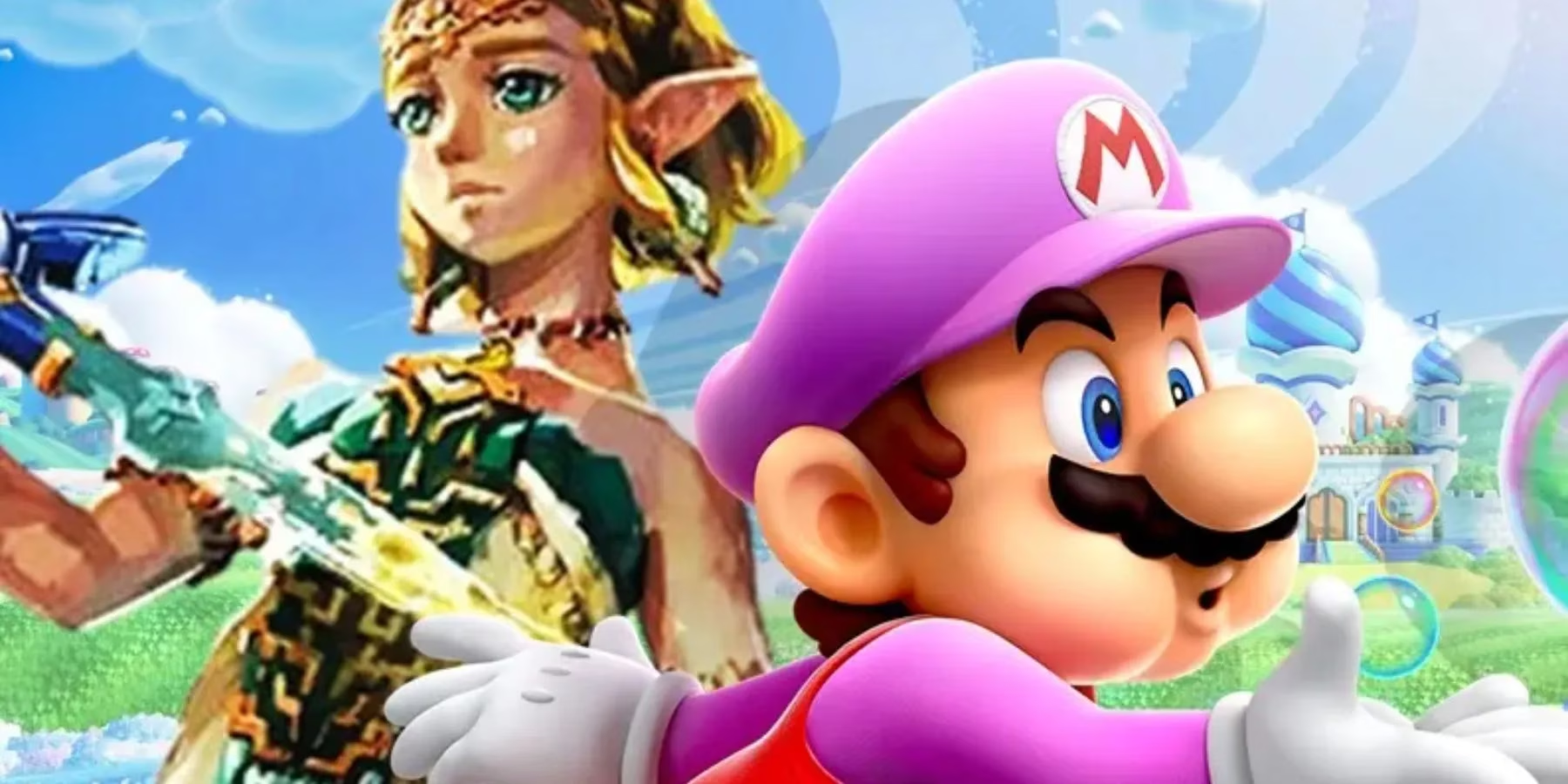
Tears of the Kingdom achieved something nearly alchemical, solidifying Breath of the Wild’s vast, breathless experiment into a language that could speak across two full adventures. It took the open-air canvas and added layers of vertical depth, fused ancient machinery with modern wonder, and wove a tale that felt both intimately familiar and daringly fresh. Super Mario Bros. Wonder, meanwhile, took on a different kind of legacy—the venerable 2D platformer—and infused it with a vitality that many had feared was lost beneath the tidy, sterile tiles of the New Super Mario Bros. series. Where the New series felt like a carefully preserved museum piece, Wonder transformed the exhibit into a living garden. The game’s aesthetic was a carnival of luminous oils and watercolors, its characters bounding with elastic, comedic grace; each level a vignette painted with the brushstrokes of a child’s dream. The introduction of the Wonder Flower was akin to placing a prism before a sunbeam—suddenly, the familiar geometry of platforms and pipes fractured into a spectrum of psychedelic marvels, from stampeding herds of silhouettes to gravity-bending waltzes among the stars.
Yet, for all its triumphs, Super Mario Bros. Wonder now stands at a crossroads reminiscent of a solitary peak. The mountain has been climbed, the view savored, but the air still holds the fragrance of undiscovered blossoms. Tears of the Kingdom demonstrated the profound wisdom of letting a groundbreaking idea breathe twice—a second inhalation to expand the lungs of creativity before moving on to entirely new terrains. That game began as a DLC notion before swelling into a full-fledged epic that reused, reimagined, and then transcended its predecessor’s skeleton. Mario Wonder, despite releasing without any announced DLC, carries within itself a similarly glowing ember that begs to be fanned into a full second flame. The work poured into its art direction, the ballet of its revamped animations, the playful roster of characters like the now-playable Peach and Daisy and a band of Yoshis in multiple colors—all these are threads of a tapestry that has only just begun to be woven. A direct sequel, built upon the same engine and spirit, would be like a composer returning to a symphony’s opening movement, expanding it into a full opus where every motif is given time to swell, intertwine, and finally rest in a satisfying coda.
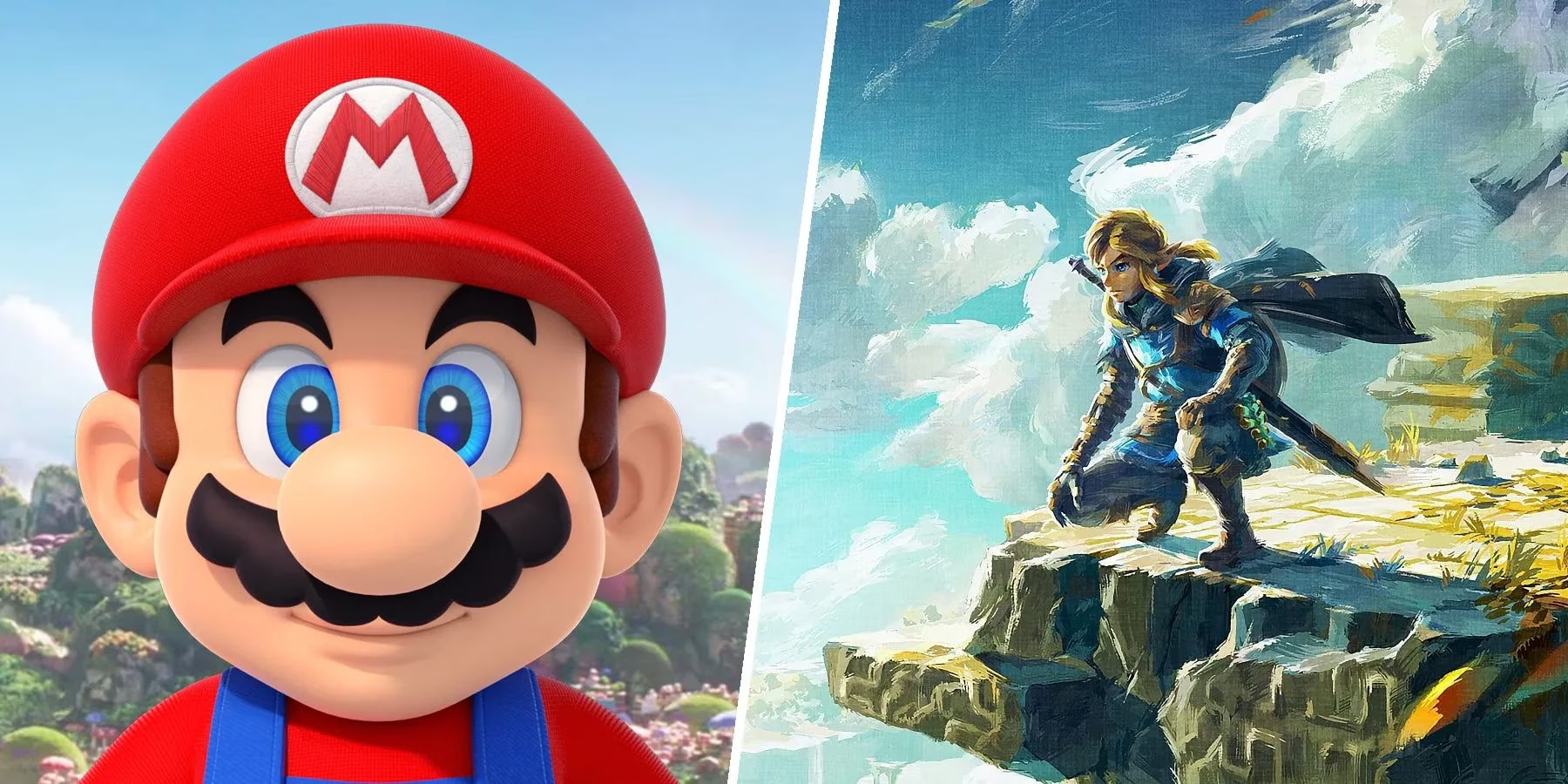
Imagine, then, a successor that walks the path Tears of the Kingdom walked. The vibrant art style of Wonder would remain, its looping, elastic character animations evolving further—perhaps adding emotional nuances, tiny gestures that make the heroes feel even more like living puppets in a theatrical fable. The cast of playable characters could deepen: Nabbit might return with new thieving tricks, or long-absent faces like Wario could muscle in, his greed colliding with the fantastical physics of the Flower Kingdom. The badge system, a quiet revolution in Mario design, would not simply return but metamorphose. A sequel could allow badges to chain together in combos—imagine the Grappling Vine badge intertwined with the Parachute Cap, letting Mario swing through canopies and then drift gently down like a dandelion seed. More crucially, the Wonder Flower effects, which in the first game scattered magic like unpredictable lightning, could be shaped into a more deliberate instrument. Imagine a world where the player carries a "Wonder Seed" that can be planted in specific locations, locally terraforming a segment of a level into a personalized fantasia. One moment, the ground melts into liquid music; the next, enemies wear silly hats that change their behavior. This would be the sequel’s true treasure: taking the spontaneous whimsy of Wonder and giving players a paintbrush to paint their own surrealist masterworks.
The online mode, too, would blossom. In Wonder, the silhouettes of other players were ghostly companions, leaving behind standees and item gifts like notes passed between adjacent seats in a theater. A sequel could deepen this shared solitude, turning it into a gentle cooperative fabric where the world itself remembers the kindness of strangers—platforms that grow from the collective cheers of players, ghostly bridges built by the echoes of past victories. Such an approach would honor the spirit of the original while pushing into Territorially unexplored, like a second wave sweeping higher up the same shore.
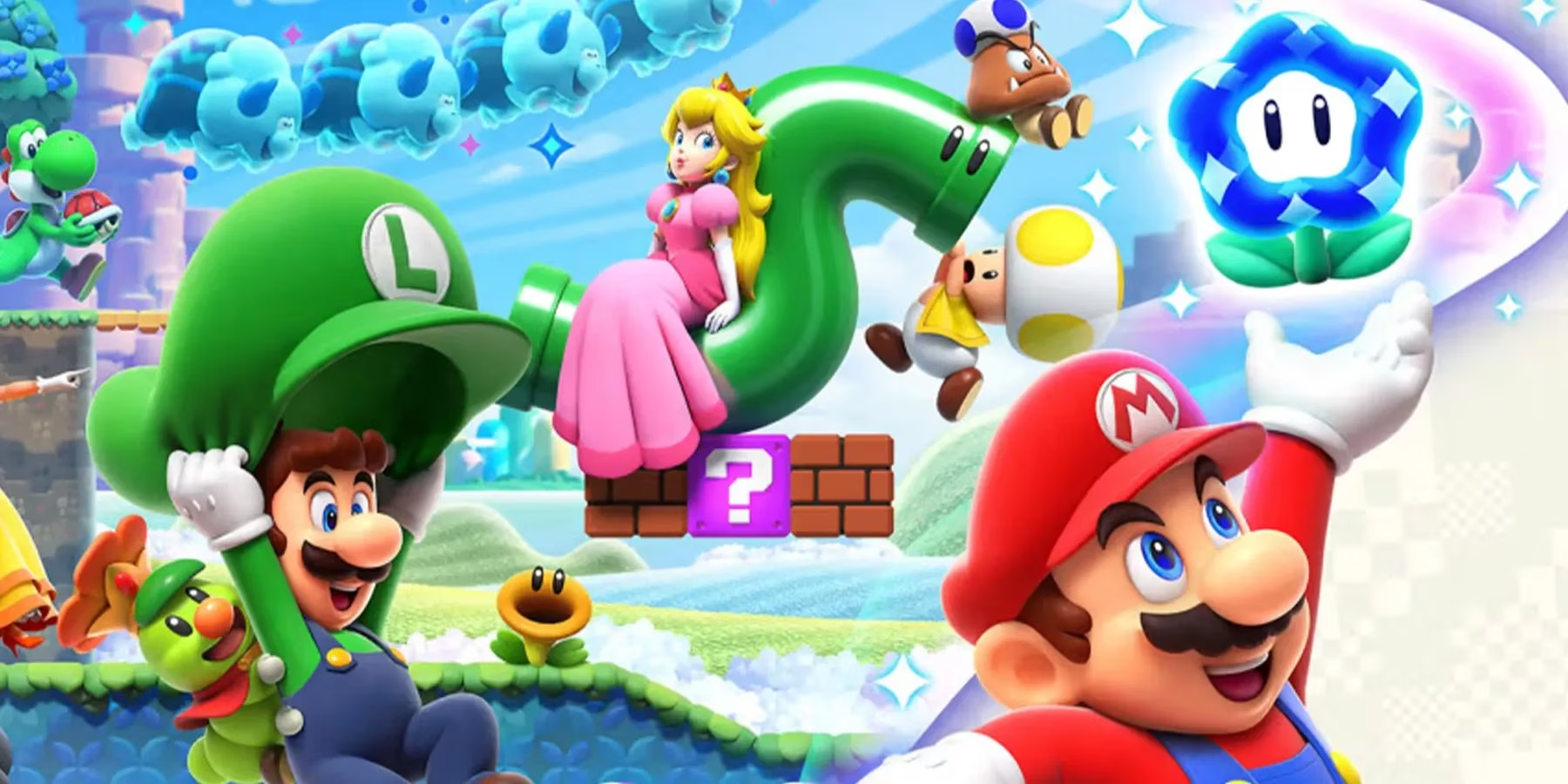
Power-ups, those delightful perversions of biology, would of course expand. The Elephant, Bubble, and Drill abilities that left such a charming imprint on 2023 could return alongside new inventions that twist the very logic of the Mario universe. A “Mirror Mushroom” might summon a reversed doppelganger, turning left into right and up into down until the effect shatters. A “Rhythm Flower” could transform platforms into musical staves, demanding timed jumps to a silent beat only the player feels. The core philosophy would remain: each power-up is not merely a tool but a joke written into the physics, a visual punchline that reshapes space itself.
Now, in 2026, three years have drifted by since the Wonder Flower first unfolded its petals. The Legend of Zelda has already whispered of a new, post-TotK journey, and a Zelda film looms on the cinematic horizon. Mario, eternal journeyman, has certainly kept busy with kart races, sports, and the occasional remake. Yet the mainline 2D series has fallen quiet, as if holding its breath. The time is ripe for Nintendo to follow the precedent it itself etched so brilliantly with Tears of the Kingdom. Let Super Mario Bros. Wonder not be a solitary firework—however magnificent—but the opening volley of a twin display. One more game, one more love letter penned on the same paper, would extract every last drop of golden juice from this remarkable reinvention. After that, the plumber can leap onto whatever strange new mushroom planet destiny holds, carrying with him the lessons of a duology that cherished its own novelty and refused to let it fade after a single celebratory night. The Wonder era deserves its own echo—an echo loud and long enough to be heard across the decades, reminding us all that sometimes the bravest thing a creator can do is to revisit magic, not to repeat it, but to deepen it until it gleams like a second sun.
Comments