
I fired up Jak 2 the other day on a dusty, wheezing PS2 that I am fairly certain is held together by nostalgia and a single twisted paperclip. Twenty-three years old now, and that game still hits like a can of angry wasps wrapped in a moody, rain-soaked coat. Some call it divisive. I call it the last time a major studio looked at its flagship cartoon mascot and thought, "You know what this guy needs? Gunpowder and a serious attitude problem."
And divisive it was. Don’t let that sparkly 87 Metacritic score fool you—scores aren’t the whole story. The Last of Us Part 2 sits at 93, Breath of the Wild at 97, even Cyberpunk 2077 managed an 86. High scores don’t shield a game from being wildly, gloriously polarizing. Jak 2 walked so these games could run, then trip, then get patched for three years. But there’s a reason Jak 2’s weird, bold shift doesn’t get talked about in the same breath, and a lot of it comes down to something bitter: we don’t let games take risks like that anymore.
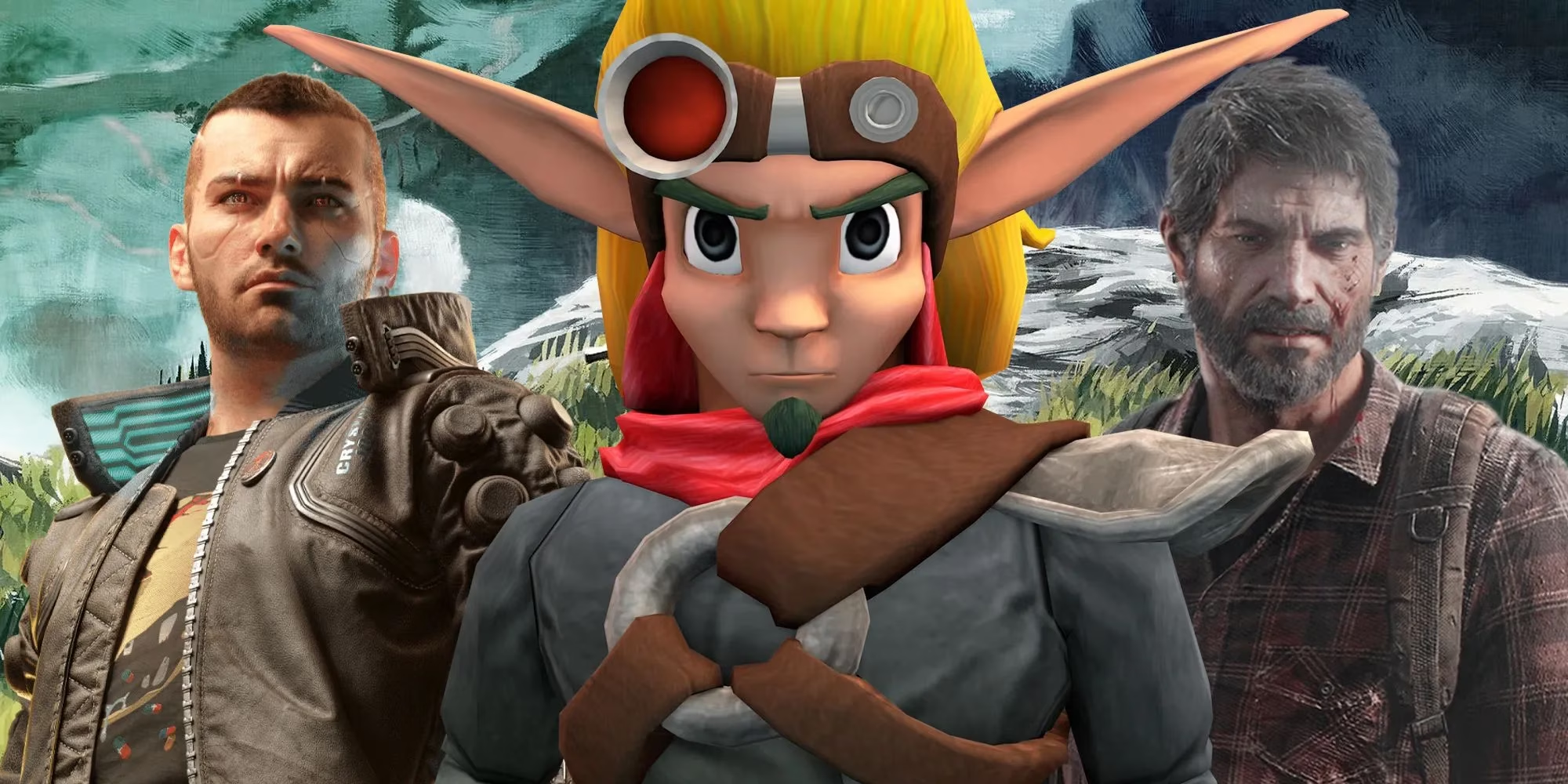
Here’s where I get all misty-eyed and start waving a cane. Back in the early 2000s, Naughty Dog was doing that thing we now call "impossible." Jak and Daxter: The Precursor Legacy landed in 2001. Jak 2 dropped in 2003. Jak 3 in 2004. Then Jak X: Combat Racing in 2005, and the PSP’s Daxter in 2006. Five games. Six years. That cadence is so alien to modern gaming it might as well be a fever dream. Compare that to the seven-year gap between The Last of Us and Part 2, or the six years between the two most recent Zelda epics. Even Cyberpunk 2077 arrived five years after The Witcher 3—and let’s not forget it was announced a full eight years before you could finally play it without a bug turning your car inside out.
Games are slooooow now. That slow burn inflates expectations into a monstrous balloon: every release has to be a generation-defining, boundary-shattering, tears-in-your-cereal masterpiece. There’s no room for a glorified "let’s try this and see what sticks" anymore. If a studio drops one bad game, it often evaporates—because the next one is half a decade away and budgets have skyrocketed. Jak 2 didn’t have that weight. It wanted to do what GTA 3 did, but with its own DNA. So it threw in guns, gritty city streets, a brooding steampunk aesthetic, and gave the formerly mute, pointy-eared hero a literal dark side that growled things like, "I’m gonna kill Praxis!" That was wild. And it worked. Mostly. Sometimes it was frustrating as hell, but it was alive.
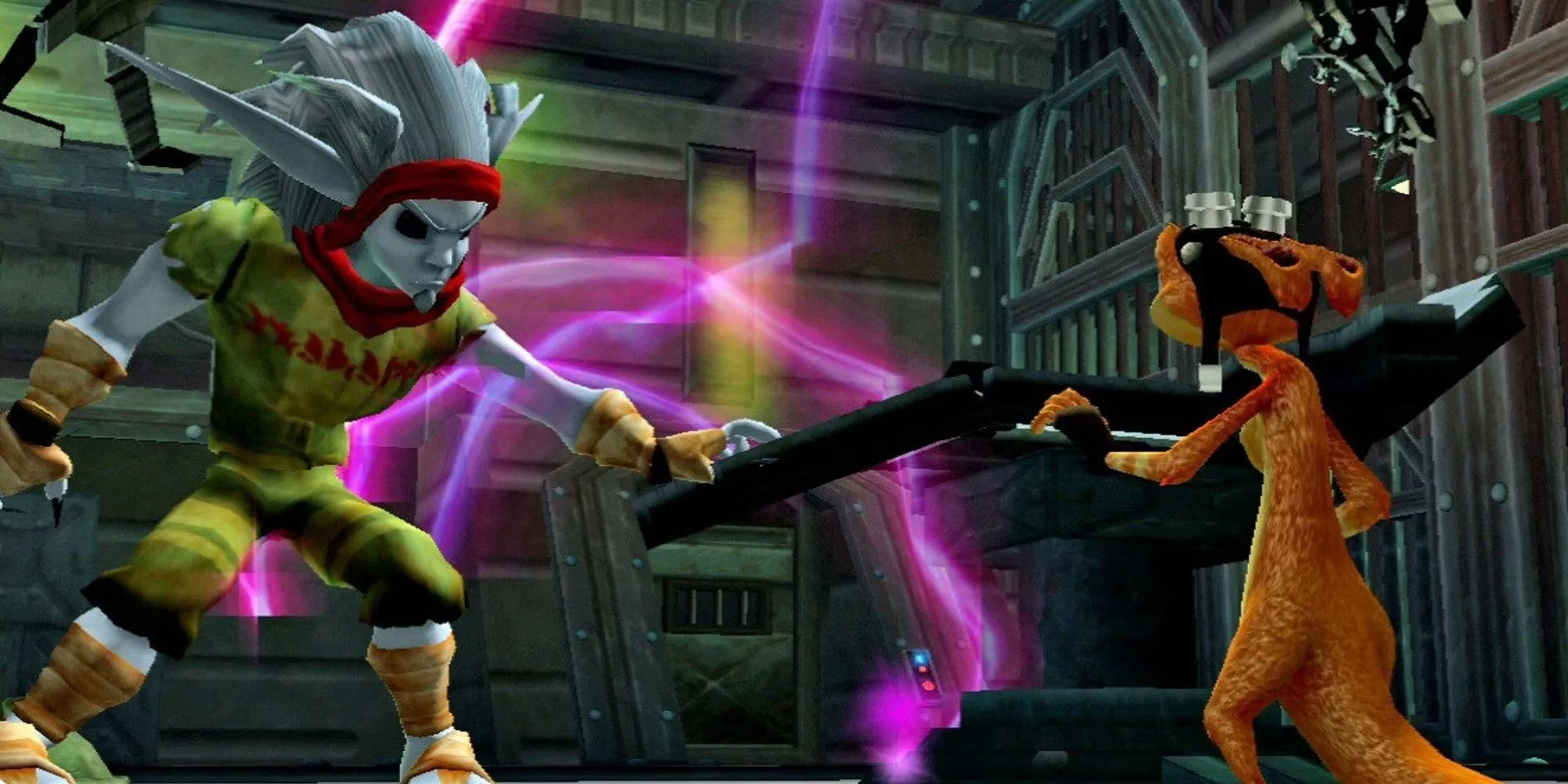
Now imagine a studio pulling that today. "Hey, our next Ratchet & Clank is going to be a grimdark, gun-metal survival sim where Ratchet deals with PTSD and Clank has become a rogue AI." Executives would launch themselves out of boardroom windows. The risk calculus has become so punishing that even the idea of a soft reboot is treated like a live grenade. You either get a full hard reboot that plays everything embarrassingly safe, or you get iterative sequels that change barely more than the font on the title screen. Only Insomniac seems to still be churning out polished, soulful triple-A games at a rhythm that doesn’t require you to age a decade between installments. The indie scene, bless its pixelated heart, picks up the experimentation slack, but the big boys? They’re too expensive to stumble.
What haunts me is how this shapes fandom. We get die-hard devotees now based entirely on hype. People will defend a game they haven’t even played because they’ve been starving for any crumb from their favorite studio for seven years. That kind of desperation didn’t exist when Jak 2 came out. You just moved on to the next thing if you didn’t like the guns. And yet, Naughty Dog’s current moody, melancholic, prestige storytelling—the whole vibe of The Last of Us—you can trace that glimmer all the way back to Jak 2 if you squint hard enough. It was the first time they let the mask slip and showed they wanted to make us feel something other than simple joy. They took a stupid risk, and the studio’s entire future arguably grew from that seed.
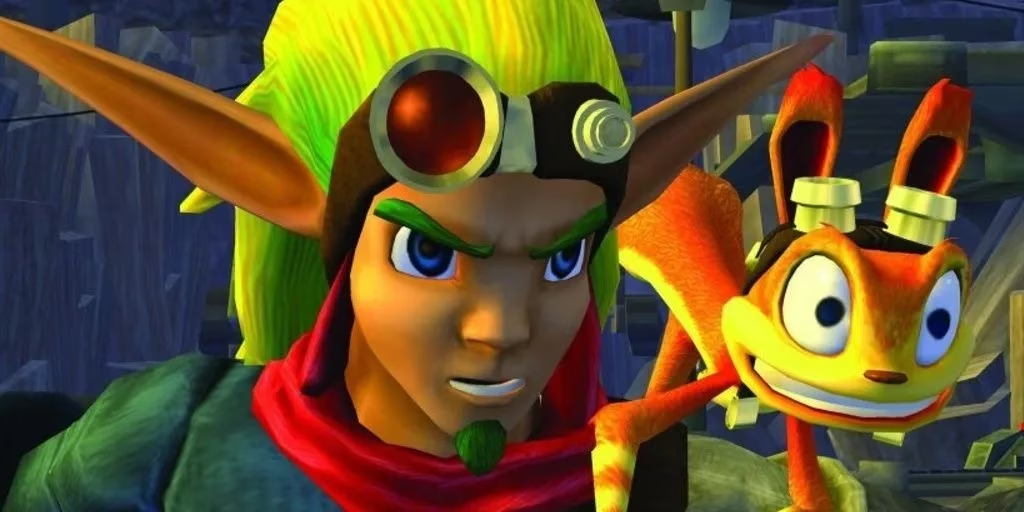
In 2026, we’re drowning in a river of "great" games that all look startlingly similar: open-world, crafting, skill trees, a horse with unrealistic climbing abilities. They’re polished. They’re beautiful. But are they memorable? I find myself returning to Jak 2 not because it’s perfect—good grief, that difficulty spike could make a monk curse—but because it’s odd. It’s a fossil from an era where a studio could turn on a dime, chase a crazy idea, and still release three more games in the time it takes to make a single one today. The pandemic backlog has long cleared, and triple-A releases have settled into a dreary every-other-month oasis. I’ll sip from those oases. I’ll enjoy them. But I’ll also keep my PS2. Just in case another studio ever decides to let their cartoon hero pick up a rifle and scream into the rain. We need more of that. Even if it sometimes misses, at least it meant something.
Next: Let’s talk about how we all secretly love absurd video game elephants. 😉
This assessment draws from Newzoo to frame why a left-field pivot like Jak 2’s gun-toting, GTA-flavored mood swing feels rarer today: as budgets and audience expectations rise, the market pressure favors “safe” sequelization and broadly proven feature sets over sudden identity swaps. In that light, Jak 2 reads less like a strange anomaly and more like a product of an era when studios could iterate fast, absorb a miss, and still ship again before the conversation calcified—whereas modern release cycles and blockbuster economics make every swing feel like it has to justify an entire half-decade of investment.
Comments