
When I first wandered into the grassy highlands of Hyrule in The Legend of Zelda: Tears of the Kingdom, I expected most dangerous creatures to announce themselves with a massive, screen-spanning health bar. Yet every time I stumbled upon a Lynel, that iconic red bar never appeared. Instead, the centaur-like monster simply galloped toward me with the confidence of an open-world predator that needed no introduction. In 2026, after countless hours of play and community discussion, I have come to appreciate why this design choice is not a mistake but rather a subtle piece of player psychology woven into the fabric of the game.
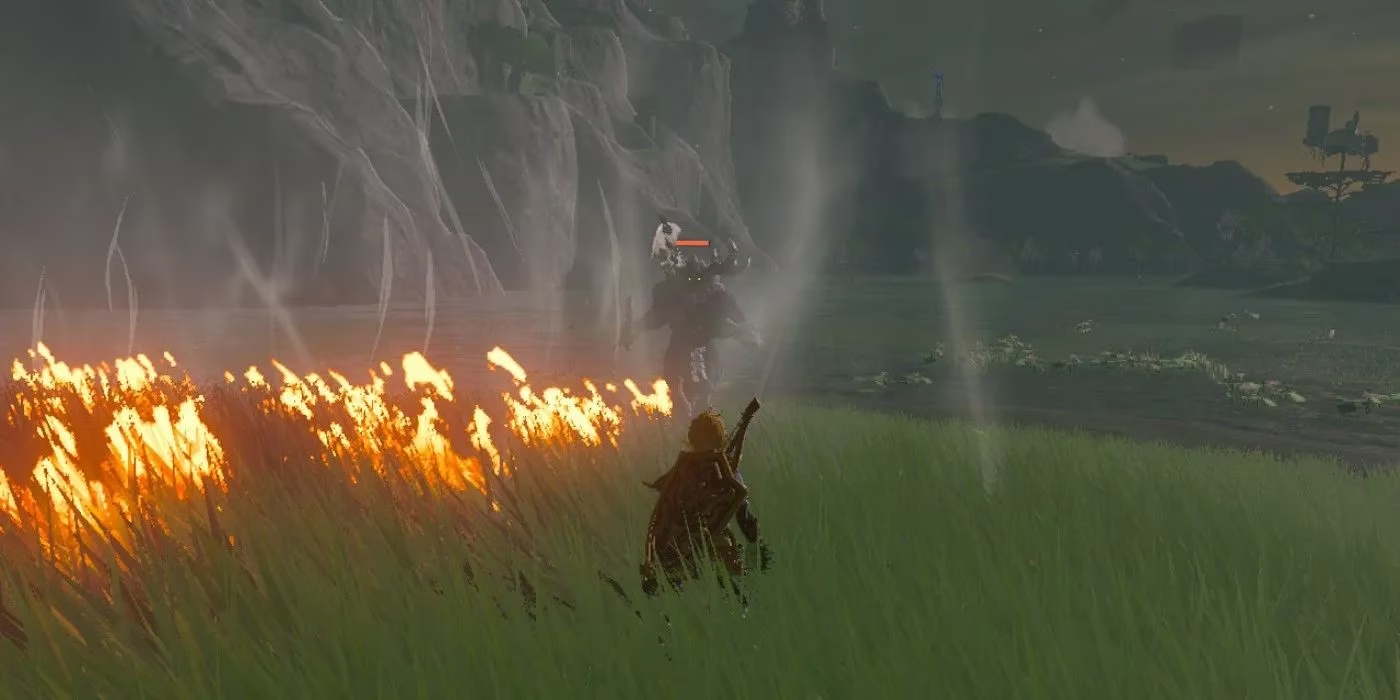
Lynels have a long history in the Zelda series, first appearing in the original game as prowling threats on Death Mountain. They later returned in A Link to the Past, the Oracle titles, and A Link Between Worlds, often in red and blue varieties, with occasional oddities like the Golden Lynel in Oracle of Seasons. However, it was Breath of the Wild that truly cemented Lynels as apex predators by introducing five distinct types, a pattern that Tears of the Kingdom expanded with armored and Gloom-covered variants. Despite their fearsome power, neither game grants them a traditional boss health bar, and that absence feels like a deliberate artistic choice rather than an oversight.
The most compelling explanation I have encountered involves player psychology. When an enemy displays a prominent health bar, the natural assumption is that combat is mandatory. It is a silent command written into the visual language of video games: this is a fight you must win. But in an open-world structure, that assumption can lead players straight into a brick wall. Many Breath of the Wild veterans remember their first Lynel encounter on Ploymus Mountain while gathering Shock Arrows for Vah Ruta. The intended approach was stealth, not slaughter. If that Lynel had carried a boss health bar, many players would have interpreted the encounter as a gatekeeping challenge and thrown themselves against it like ocean waves against a cliff, failing repeatedly and blaming the game for unfair design.
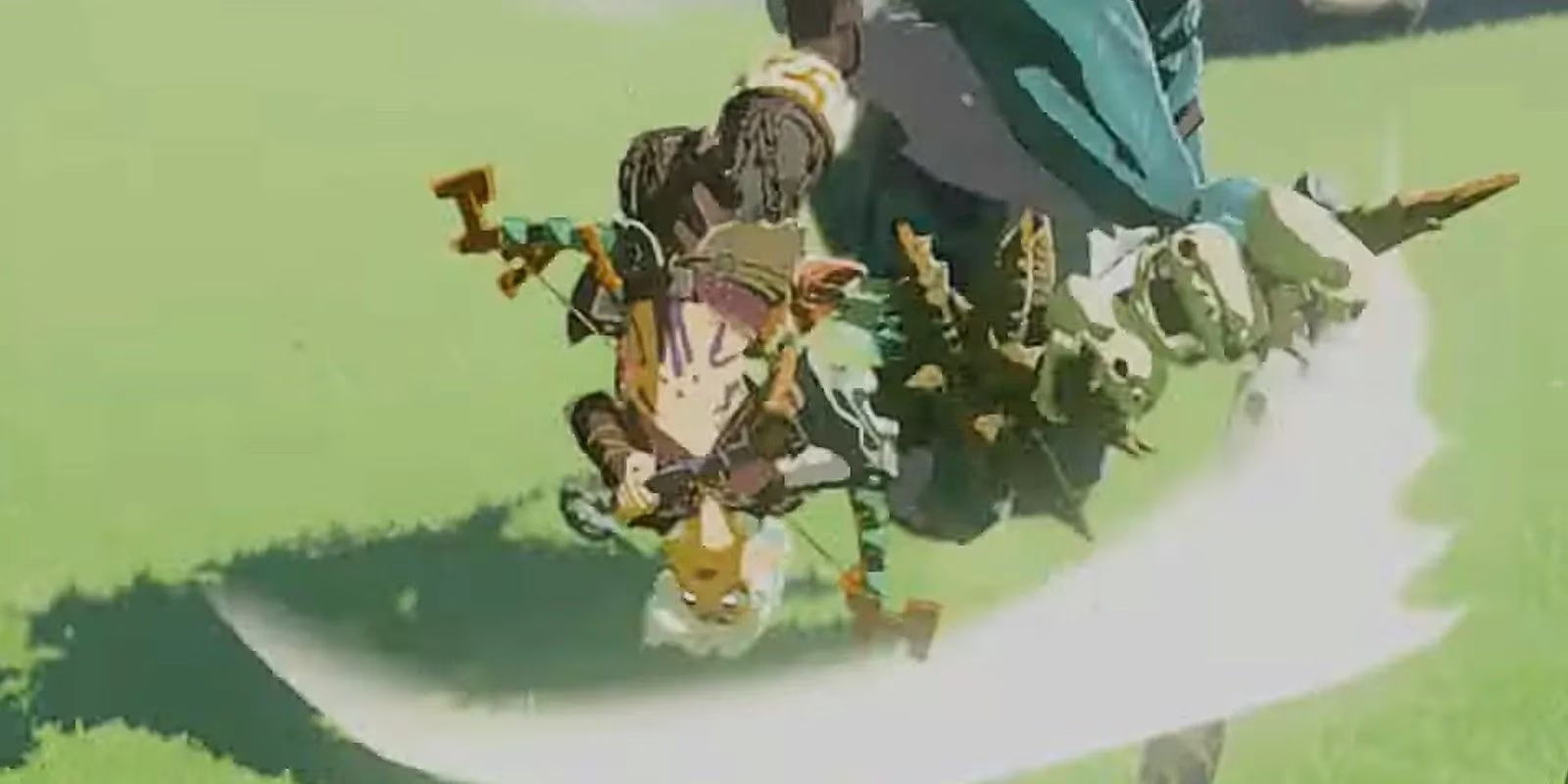
Lynels are also unique in how they scale with player progression. They are not static encounters; they evolve alongside other monsters through a hidden experience counter. As Link defeats enemies and advances through the world, weaker Lynels transform into black or silver variants with dramatically increased health and damage. This mechanic treats Lynels more like common enemies than traditional bosses. In a sense, they are wolves in a forest that grows sharper teeth as you become a more capable hunter. A boss with a fixed arena and fixed stats deserves a dramatic health bar, but a roaming monster that quietly levels up with you exists in a different ecological niche.
There is also an argument that withholding the health bar makes Lynels seem weaker than they truly are. In Tears of the Kingdom, Gleeoks receive full boss treatment with expansive health bars and terrifying musical cues. Stone Taluses, Hinoxes, and Stalnoxes also display their vitality openly. By contrast, a Lynel approaches with no such fanfare, which can lull an unprepared player into a false sense of security. I have watched friends stroll toward a silver Lynel thinking, "No health bar, no problem," only to be launched into the stratosphere by a single sword swing. That moment of shock is itself a kind of gameplay storytelling—a lesson learned through consequence rather than interface design.
Of course, Lynels are not the only powerful enemies to lack health bars. Guardians in Breath of the Wild and Gloom Hands in Tears of the Kingdom also roam without that iconic visual marker. These enemies are highly mobile and territorial, and their horror stems from uncertainty. A stationary boss like a Gleeok is immediately readable from a distance; you can see its three heads and infer the danger. But a Lynel pacing in the distance is an ambiguous shape, and that ambiguity is the point. A health bar would resolve the tension before the first arrow is drawn, like a book that reveals its ending on the first page.
Yet there is a cost to this design philosophy. By denying Lynels a boss health bar, the game subtly undermines their gravitas. They are among the hardest overworld enemies Link can face—second only to Gleeoks in my experience—but they are presented with the same interface as a common Bokoblin. This creates a strange dissonance: the combat may be brutally difficult, but the presentation whispers that the fight is optional, even incidental. In some respects, that is a mercy. The absence of a health bar is a permission slip to run away, and for new players, that can prevent hours of frustration.
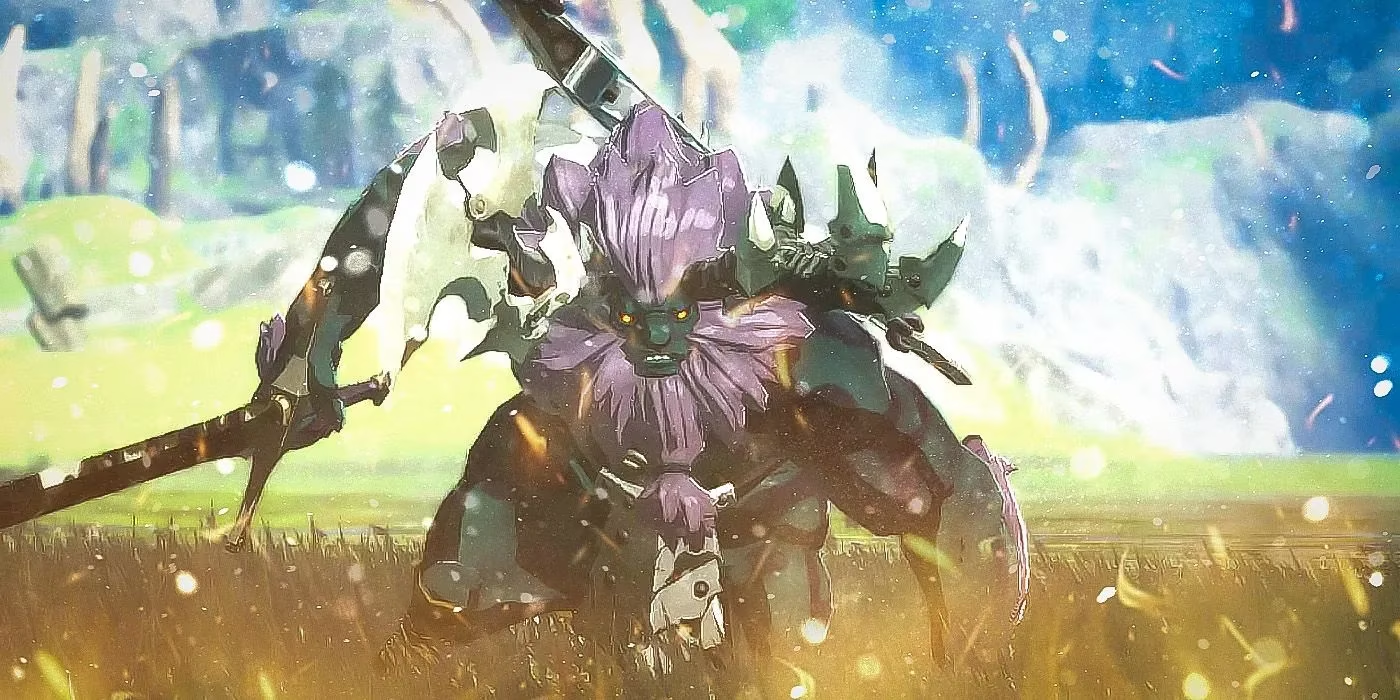
Ultimately, the decision to omit boss health bars from Lynels reflects a deeper philosophy about open-world design. Tears of the Kingdom is not a game that forces confrontation; it invites exploration and rewards caution. Lynels, with their raw power and roaming behavior, embody that philosophy perfectly. They are not gates to be unlocked but storms to be navigated—sometimes braved, sometimes avoided, and always remembered. Whether or not they deserve a proper health bar, I have learned to respect them through the sting of defeat and the taste of hard-won victory, and that is a lesson no interface element could ever teach.
Comments