
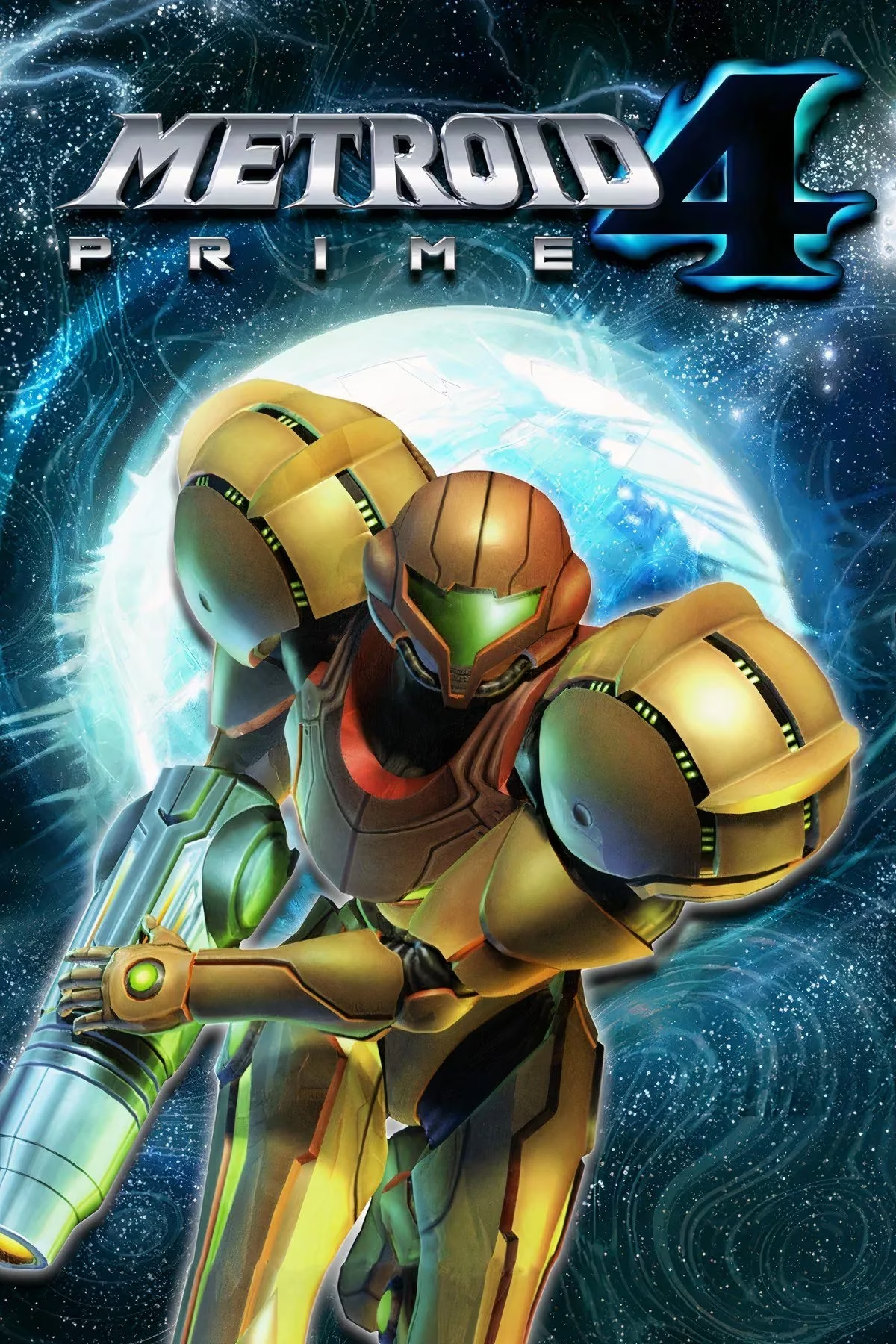
Man, the recent Nintendo Direct was absolutely fire! 🔥 As a long-time fan, seeing the official gameplay footage for Metroid Prime 4: Beyond finally drop after what feels like a century (okay, 17 years) was a moment of pure, unadulterated hype. The teaser hit all the right notes for us franchise die-hards. But as I rewatch the footage in 2026, with the game's release now in the rearview mirror, I can't help but reflect on one particular legacy element that, in my opinion, the sequel was wise to evolve beyond: the whole Phazon thing.
It's wild to think about how much Nintendo's big franchises have transformed since the last Metroid Prime. The Legend of Zelda series underwent a metamorphosis as radical as a caterpillar becoming a Gundam, thanks to Breath of the Wild and Tears of the Kingdom. New tech and bold ideas shot that series into the stratosphere. Metroid Prime absolutely deserves a similar evolutionary leap. However, evolution means knowing what to keep and what to leave behind in the fossil record. Some ideas, no matter how cool they were back in the day, have been done—and often done better. For me, Phazon is one of those concepts that needed to be retired, not because it was bad, but because the gaming landscape has moved on.
The Gloom in the Room: Phazon's Familiar Shadow
Let's talk about the radioactive purple elephant in the room. Phazon, that corruptive, semi-sentient goo, was the central macguffin of the original Metroid Prime trilogy. It could poison planets, take over bodies, and create some seriously nasty bosses. It was a great plot device for its time! But here's the rub: by the time Metroid Prime 4 was in development, the "evil corrupting substance" trope had become about as common as a green pipe in the Mushroom Kingdom.
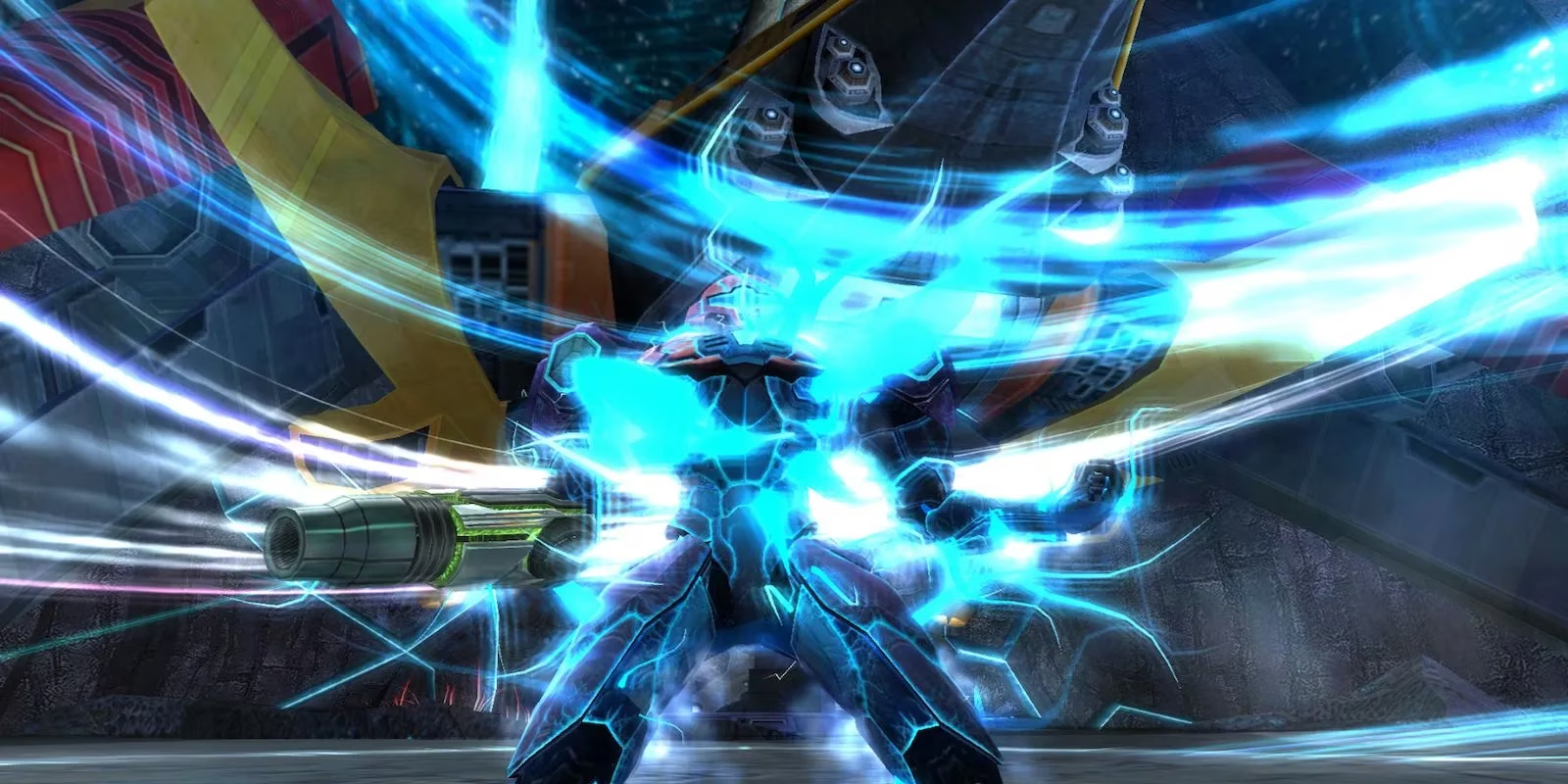
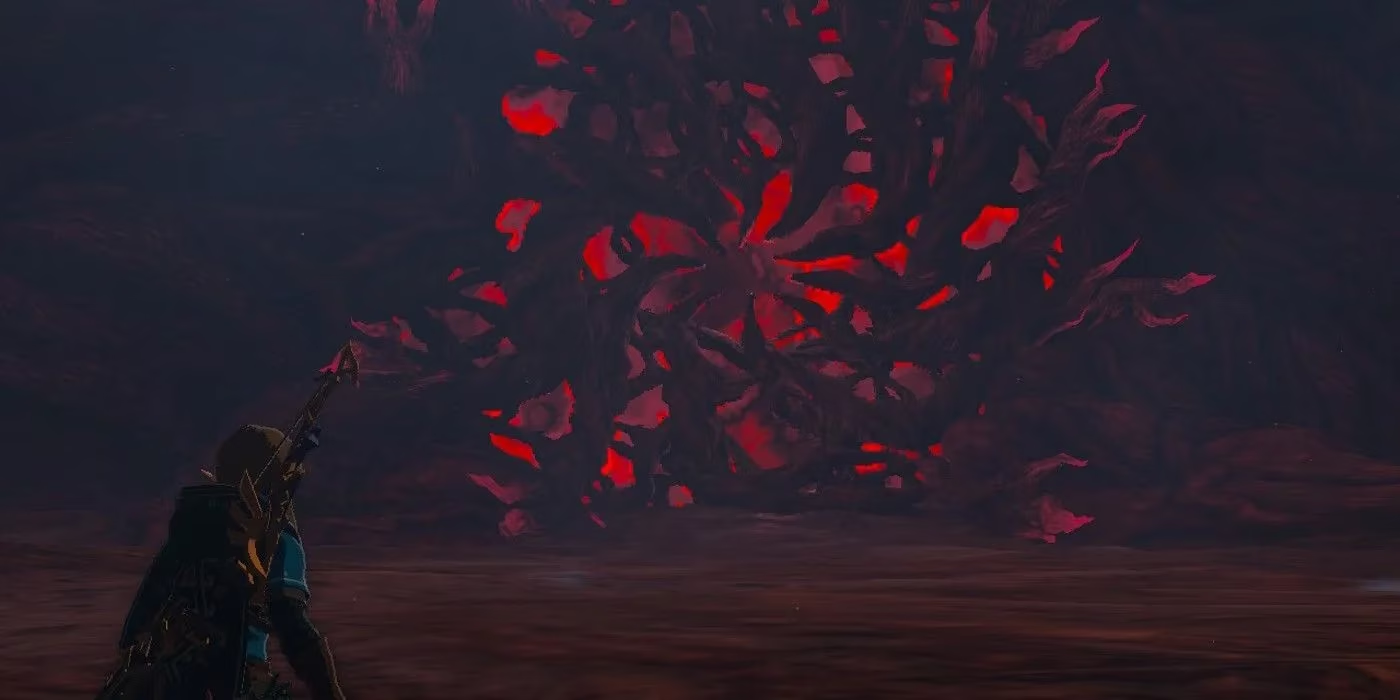
Tears of the Kingdom essentially used the same narrative engine, just with a different coat of paint. Gloom was that game's Phazon—a malignant force seeping from Ganondorf, poisoning the land, empowering enemies, and sapping Link's health. Sure, the lore dressing is different (alien mutagen vs. demonic malice), but their narrative function is identical: they are the omnipresent physical manifestation of the main villain's evil, an environmental hazard and a story driver rolled into one. Having Phazon return in Prime 4 would have felt like Nintendo was reheating leftovers from a different, albeit excellent, meal.
Time to Let Go: Why the Trope Feels Tired
Don't get me wrong, both TOTK and the Metroid Prime trilogy are masterpieces in their own right. But the "corrupting goo" is a tool that's been in Nintendo's narrative toolbox for a long time. We saw it with the Graffiti in Super Mario Sunshine! It's a reliable mechanic, but for a series returning after nearly two decades, "reliable" can risk feeling "safe" or even "dated."
Imagine if Metroid Prime 4 had doubled down on Phazon. The moment Samus landed on a new planet and saw those familiar blue veins, a chunk of the mystery and potential for surprise would have evaporated. It would have been like a magician pulling the same rabbit out of the hat for the fourth time—we all know the trick now. The joy of a new Metroid adventure is the unknown, the eerie, unexplored biomes that hold fresh horrors and wonders. Sticking with Phazon would have been a creative anchor, holding the series back from sailing toward new, uncharted stars.
Beyond the Goo: What Prime 4's Legacy Should Be
The beauty of Metroid Prime 4: Beyond (and what we ultimately got to play) was its courage to look forward. The Switch era was Nintendo's renaissance, a period where they took beloved formulas and remixed them into something groundbreaking. Prime 4 was positioned as the crown jewel to close out the Switch's legendary run—a final boss of a game before the next console generation began. It deserved a threat that felt as new and intimidating as the game's likely visual fidelity.
Retro Studios had the monumental task of making Samus's return feel both familiar and revolutionary. Clinging to Phazon would have been the easy path, a comforting but ultimately limiting nostalgia trip. The series needed its "Breath of the Wild" moment—not in genre, but in boldness. It needed a new cosmic horror, a new environmental puzzle, a new existential threat that would make us feel the same awe and isolation we felt stepping onto Tallon IV for the very first time, but through a modern lens.
In the end, leaving Phazon in the past wasn't about disrespecting the trilogy's legacy; it was about ensuring Metroid Prime's future. It was about proving that Samus Aran's greatest adventures aren't behind her, but are waiting in the vast, unexplored darkness beyond. And honestly, that's a mission statement worth blasting off for. 🚀
Comments